Bruise Repair
Cores confirm crushed insulation under bruised membrane; the section is cut out, replaced with dry board, and patched to match.
We provide Washington commercial roof repair after hail and wind, walking each roof for damage that never shows from the parking lot.
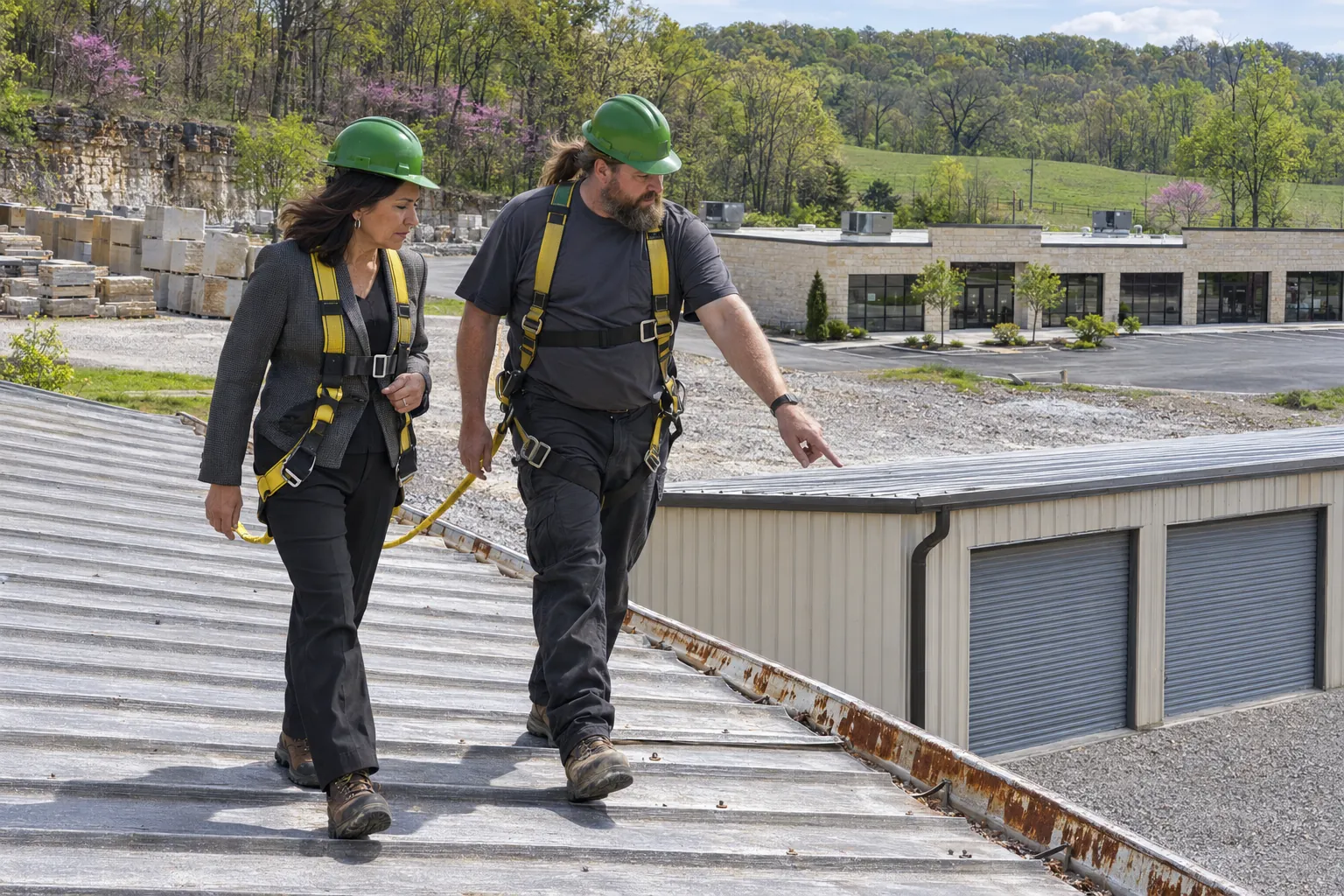
Washington commercial roof repair after hail starts with a walk of the whole roof, because the damage that leaks later is rarely visible from the ground.
Shops, offices, and processing buildings in Washington carry metal and membrane roofs that hail marks in different ways. Steel dents and loses coating at the ribs; membrane bruises underneath, where cores and a close look are the only way to find it.
Wind does its own damage on the same storms. Edge metal lifts at the corners, loose flashing tears at the laps, and gutters pull away from the eave. Each of those gets checked on the same walk, so one visit covers everything the storm touched.
Storm damage often shows up weeks later. These pairs connect the indoor sign to the hit on the roof.
A leak starts well after the hail, during an ordinary rain.
Hail bruised the membrane and cracked it underneath, and the crack finally opened through.
A skylight drips at its edge and shows a hairline crack.
Hail cracked the dome or broke the seal where the frame meets its curb.
Small rust stains appear on a steel liner months after a storm.
Hail chipped the finish on the panel ribs, and bare steel is now rusting.
Staff hear flapping at the roof edge during wind.
Wind lifted the edge metal and pulled fasteners at the corners, where uplift is strongest.
Office workers spot dimpled panels on a lower roof outside a window.
Hail dented the ribs and flats of the steel, and the finish at each dent gets checked for cracks that will rust.
A Washington roof before and after storm repairs.
Storm repairs target what hail and wind break most often.
Cores confirm crushed insulation under bruised membrane; the section is cut out, replaced with dry board, and patched to match.
Cracked domes and broken vent caps are replaced, and the curbs under them are reflashed.
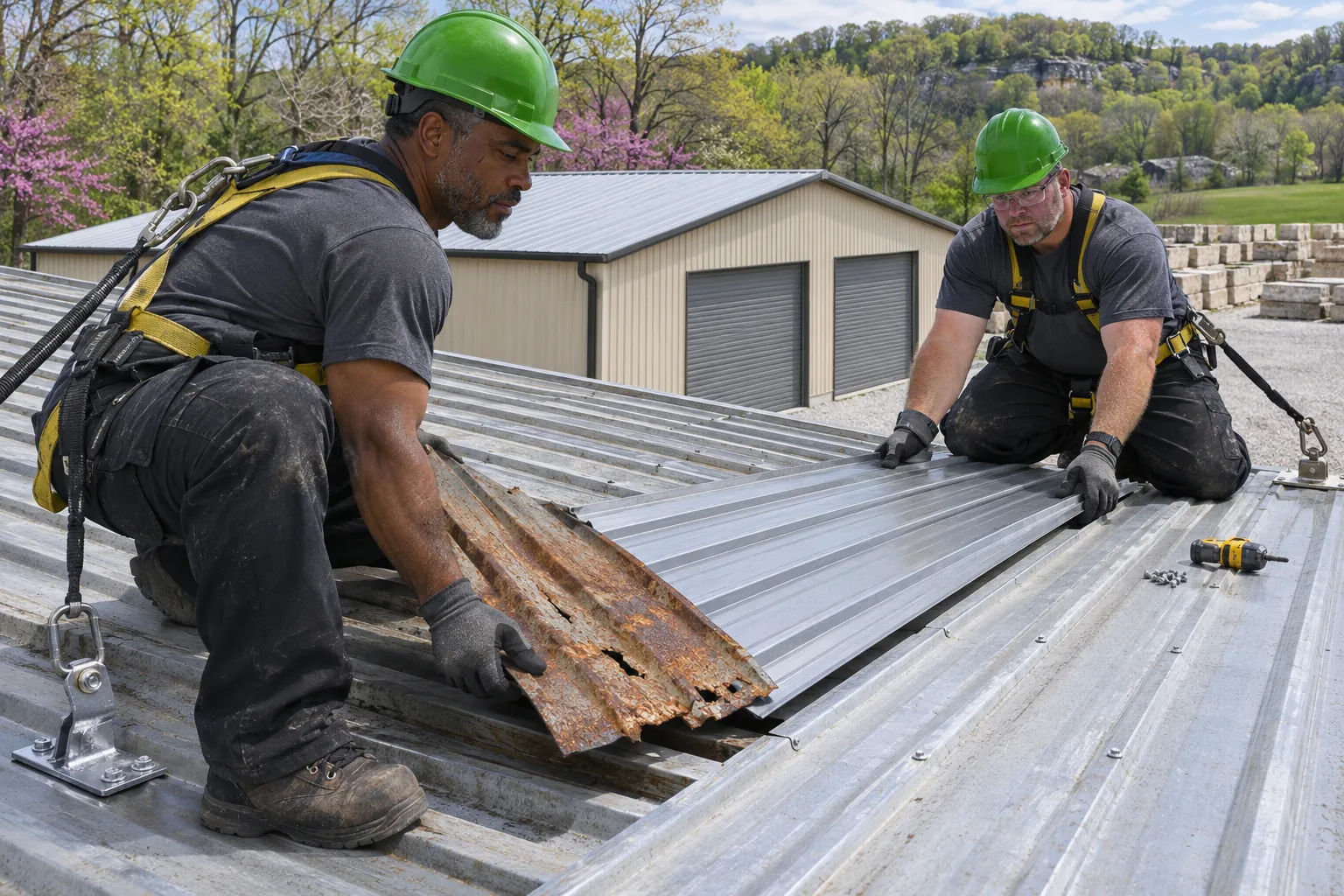
Chipped ribs get primed, holed panels get swapped, and lifted edge metal gets refastened at the corners.
Gutters dented or pulled loose by hail and wind are rehung, and crushed downspouts are replaced so water clears the eave again.
Hail damage tends to leak weeks later. Book a storm walk now and get dated photos of what the roof took.
Storm work follows four steps from walk to records.
Steel ribs, membrane, skylights, vents, and edge metal are checked across the whole roof.
Areas that look bruised are cored, so repairs rest on what is under the membrane.
Each finding is photographed and dated, which helps with insurance questions later.
Openings that leak now come first, followed by finish damage on steel before it rusts.
Is your building near Washington? We repair commercial roofs in the towns below; for anywhere else, call us or send us a message.
Flat, metal, leak, and plant roof repairs in town.
Fall seam and fastener repairs before the freeze.
Heat-worn seams on retail and office roofs.
Storage, shop, and office roofs in Monroe County.
Municipal roofs and metal shops, repaired in phases.
What owners ask once a storm has passed.
Dented panels, cracked or bruised membrane, damaged flashings and vents, and broken skylights. Most of it is out of sight from the ground. A roof walk with photos, plus cores where bruising is suspected, puts repairs and any insurance claim on real findings.
Yes. Leaks on Washington commercial buildings, including shops, offices, and processing buildings, are traced and repaired at flashings, seams, drains, and metal fasteners. Owners in nearby towns can call to ask whether their building sits inside our area.
Dated photos of each finding give your adjuster something concrete to review. The claim itself stays between you and your insurer.
Small cracks can be sealed for a short time, but a hail-cracked dome usually gets replaced, with the curb reflashed while it is open.
Uplift is strongest at roof corners and edges. Once a corner fastener lets go, wind gets under the metal and peels it back, so corner fastening gets checked after every major storm.
As soon as it is safe to walk. Bruised membrane and chipped steel start out dry, and the sooner they are found, the less insulation gets soaked when they finally open through.
Most hail hits on an otherwise healthy roof are repaired: bruised sections cut out and patched, holed panels swapped, skylights replaced. Bruising across the whole field is the point where a replacement bid makes more sense.
Openings that let water in get a temporary seal on the first visit, so a second storm finds the roof closed. The walk is repeated after the second storm, and new damage is added to the dated photo record.
Had hail or high wind? Book a storm walk and get dated photos and a repair price for your Washington building.