Seam Resealing
Lifting laps on TPO and EPDM get cleaned and rewelded or taped; on steel, laps get stitched and sealed with butyl tape.
Our Bedford commercial roof repair work seals seams, flashings, and fasteners on flat and metal roofs before cold weather pries them further apart.
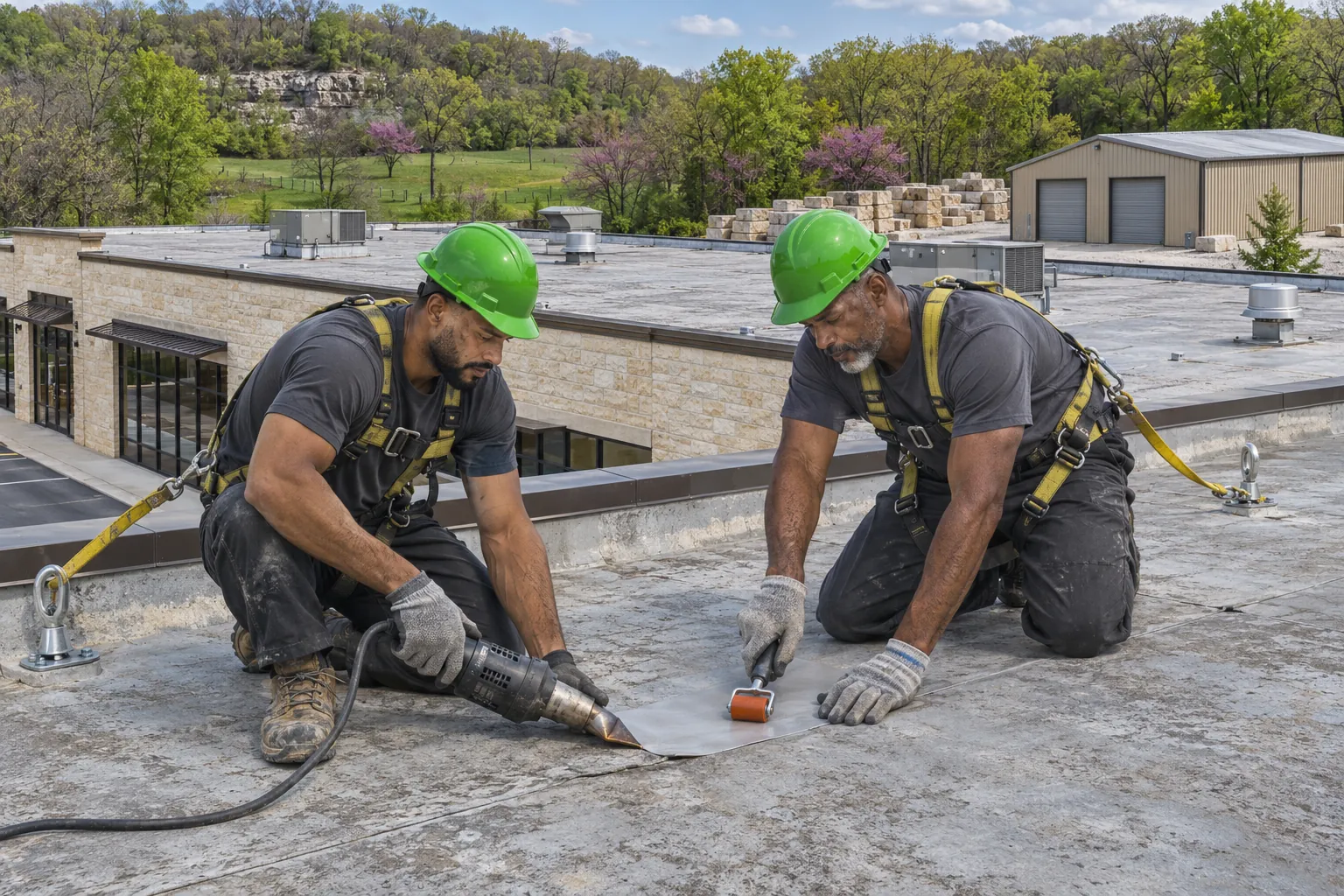
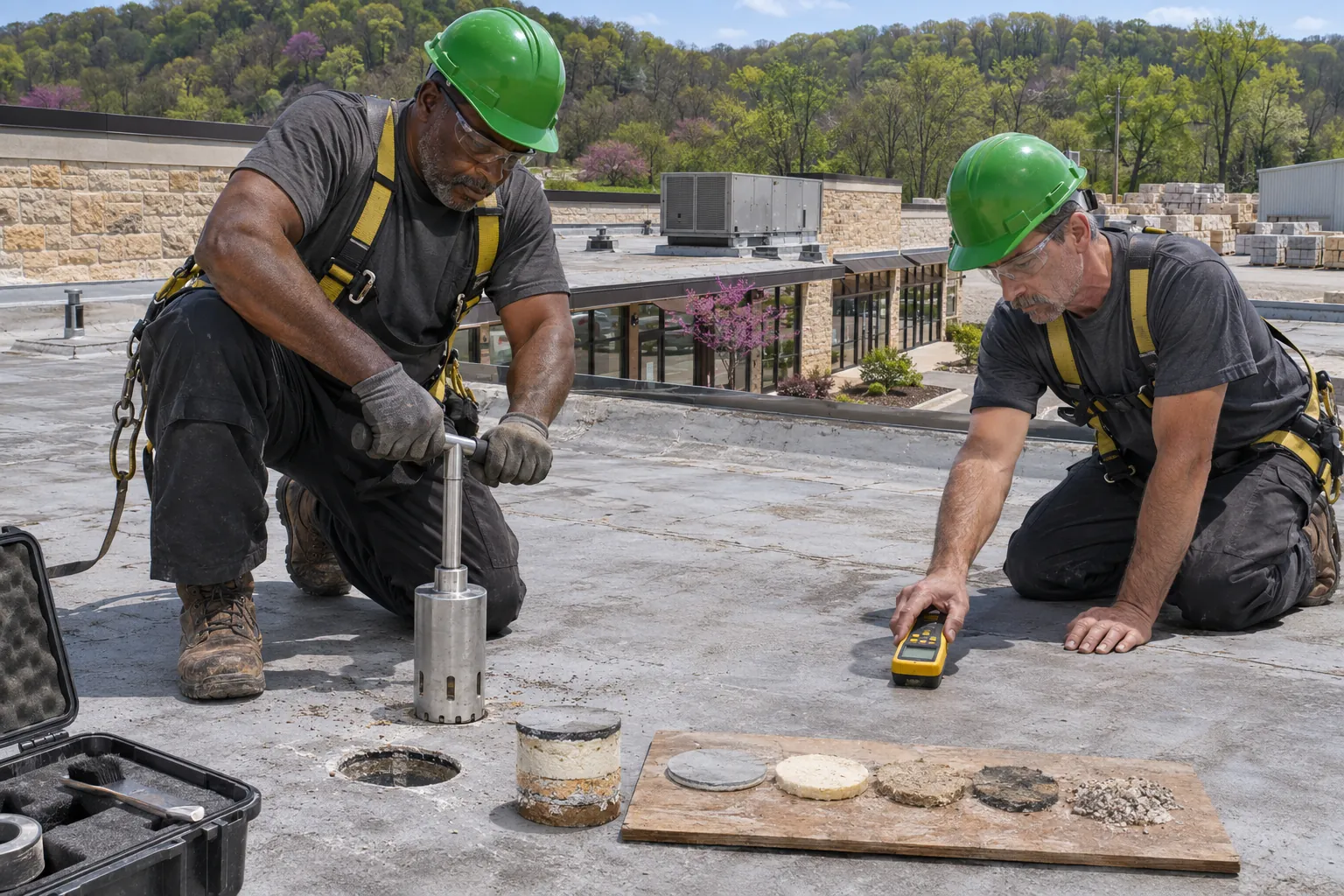
Bedford commercial roof repair is easiest to plan in fall, when small openings can be sealed before water gets into them and freezes.
Water that sits in a hairline crack freezes, expands, and widens the crack a little each cycle. A fall walk finds those openings while they are still small, on commercial and industrial buildings with flat, metal, or membrane roofs.
The same walk notes anything that can wait until spring, so the fall visit stays focused on joints that cold weather will open. You leave with a short list instead of a surprise in March.
Cold-season damage shows up inside first. These pairs link what you see to what failed overhead.
Ceiling stains appear in early spring on a roof that stayed dry all fall.
Freeze-thaw cycles opened seams and sealant joints that were only hairline cracks in October.
Staff hear a steel roof tick and rattle on cold, windy nights.
Screws have backed out as the panels expanded and contracted, and the washers no longer seal.
Icicles hang from one part of the eave every winter.
A gutter or edge detail is holding water that refreezes and pushes under the panel laps.
Drafts and damp spots show up along the top of a wall in winter.
Sealant at the termination bar has hardened and split, so water slips behind the base flashing.
Maintenance staff find spongy areas on the roof each spring.
Water got through a frozen-open seam, soaked the insulation, and the board now crushes underfoot.
Conditions on a Bedford roof before and after a fall repair round.
Fall work focuses on the joints that cold weather opens first.
Lifting laps on TPO and EPDM get cleaned and rewelded or taped; on steel, laps get stitched and sealed with butyl tape.
Every screw row on a metal roof is checked by hand, and loose ones are swapped for oversized screws with fresh washers.
Leaves and grit come out of drains, scuppers, and gutters so meltwater runs off instead of refreezing on the roof.
Hardened caulk at the termination bar is cut out and replaced, and loose bars are refastened before winter weather arrives.
Ice at the eave usually means water has nowhere to go. Book a fall visit and we will clear the path and seal the laps it reaches.
A fall round on a Bedford roof follows four steps.
Sealants and adhesives need dry decks and mild temperatures, so the visit is set inside a dry fall stretch.
Seams, laps, screws, and wall flashing are probed and marked, with photos of each opening found.
Open joints are resealed or rewelded, and loose screws are swapped before the first hard freeze.
You get a short list of spots to check after the first thaw, with photos to compare against.
We repair commercial roofs in these towns too. Building somewhere else? Call us or send us a message.
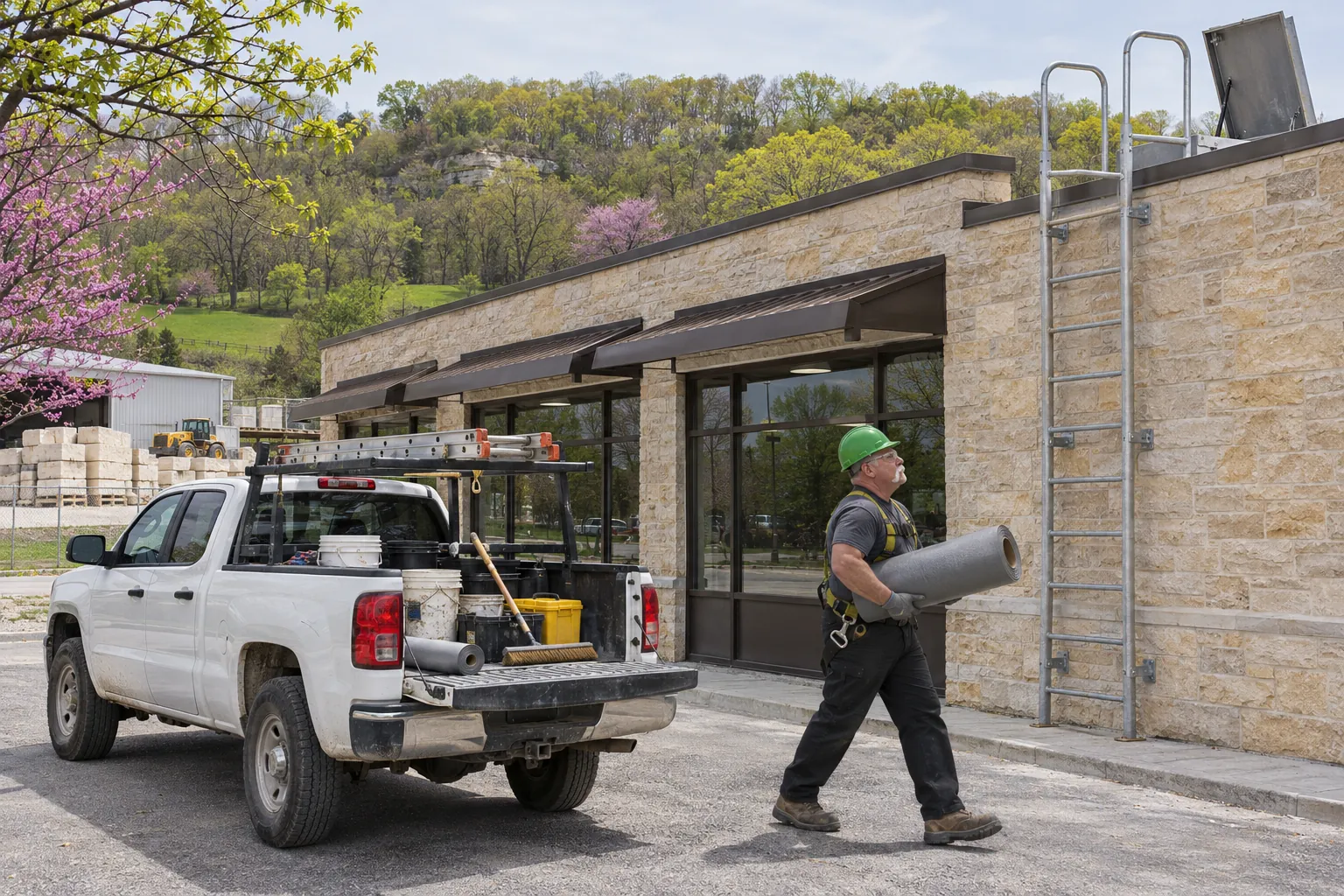
Flat, metal, leak, and plant roof repairs in town.
Hail checks and leak repairs on shops and offices.
Heat-worn seams on retail and office roofs.
Storage, shop, and office roofs in Monroe County.
Municipal roofs and metal shops, repaired in phases.
What Bedford owners ask before booking fall repairs.
Water settles into small cracks and seams, freezes, and expands, prying the gap open a bit more each cycle. Across a winter that loosens fasteners, splits seams, and cracks sealant and flashing. Sealing those small openings in a fall inspection cuts down on the leaks that appear in spring.
Yes. Flat, metal, and membrane roofs on Bedford commercial and industrial buildings get repaired in every season, and leak calls start with finding where water enters. Cold-weather work leans on welded patches and temporary seals until adhesives can be used. Buildings just outside Bedford can call to check whether we reach them.
Early fall, once summer heat has eased and before nights drop below freezing. That window gives sealants and adhesives the dry, mild days they need to cure.
Patches that lift at the edges get cut out. Stacking new material over a failed patch hides the opening, so we remove the old layers and tie one clean repair into the membrane around it.
Steel panels grow and shrink with each temperature swing, working the screws in their holes. Over a few winters the holes enlarge and the washers dry out, which is why fall rounds include a hand check of every screw row.
Clogged drains are the main reason meltwater backs up against seams. Clearing strainers, drain bowls, and gutters in fall gives water a path off the roof when snow melts, which cuts down on thaw leaks the following spring.
Price follows roof size, the number of open joints, how many screws need changing, and whether cores turn up wet insulation. The estimate visit is free, and the repair is priced after the walk with photos of each item.
Book a fall walk for your Bedford building. We will mark every opening and seal it before the cold sets in.