Repair By Section
- Damage Spread
- Around curbs and a few bays
- Equipment
- Curbs and supports reusable
- Insulation
- Dry in most cores
- Production
- Work fits around shifts
- What You Get
- Repairs ranked and closed area by area
We provide Bloomington industrial roof repair for plants and mills, fixing curbs, ducts, seams, and drains while the floor below keeps running.

Bloomington industrial roof repair keeps a plant roof working section by section. The rows show when a larger replacement plan is worth pricing.


Plant roofs take heat, vibration, and residue that office roofs never see. These are the signs we look for.
Water or residue lands on equipment under an exhaust fan.
Fan curb flashing has split from heat and vibration, or the fan cap has loosened.
Production staff notice drips with an oily or dusty tint.
Exhaust residue or stone dust has built up on the membrane and broken down seams around the vents.
Ductwork inside shifts or a support rattles in wind.
Rooftop duct supports have rusted or sunk into soft insulation, pulling at the membrane.
Puddles form at a column far from any roof equipment.
A clogged interior drain or a split in a valley sends water along the deck to the nearest low spot.
Plant repairs focus on the details that equipment and production wear out first.
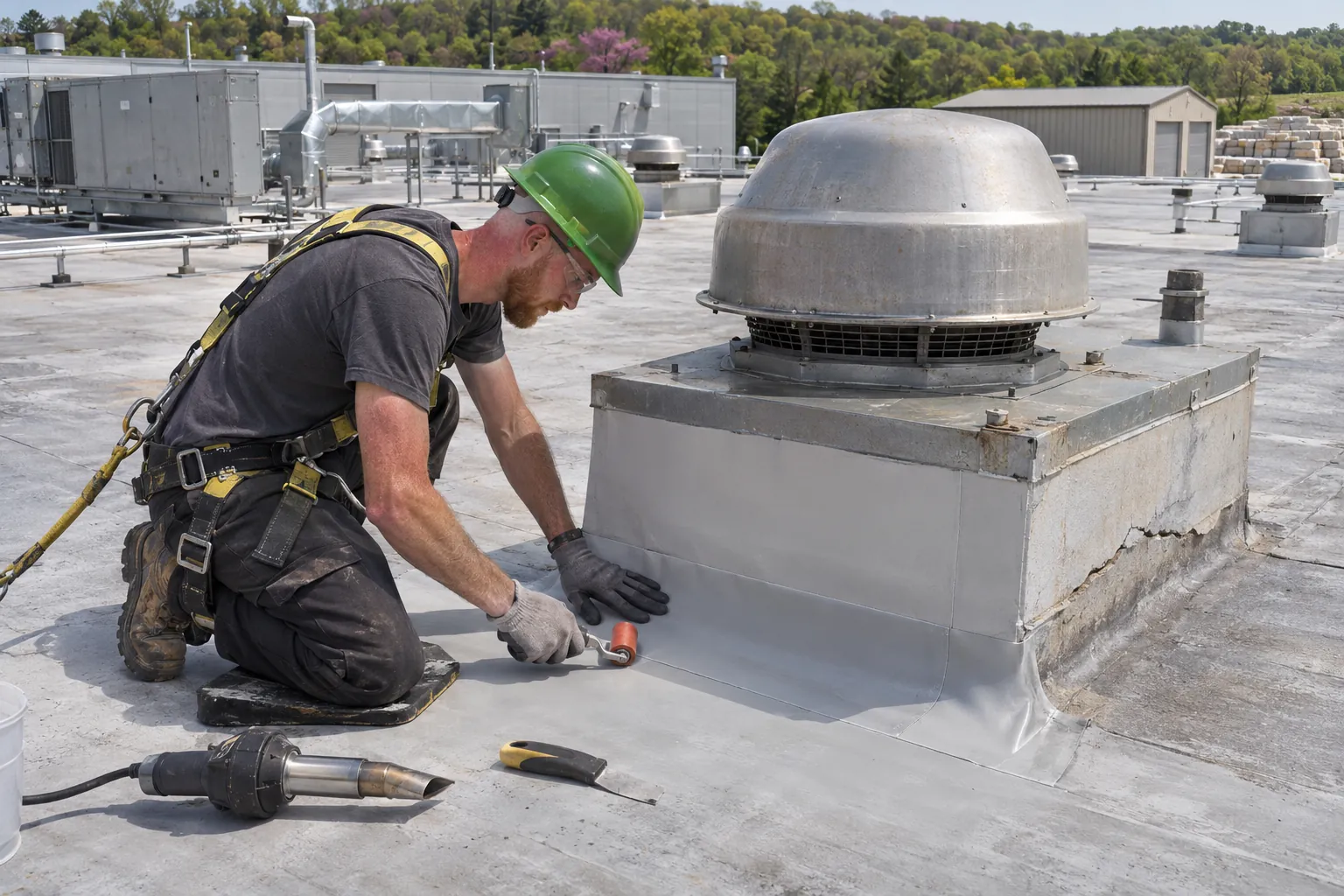
Curb flashing is rebuilt with heat-resistant detailing, fan caps are refastened, and residue around the base is cleaned off.
Rusted or sunken supports are replaced with pads and stands that spread the load, and pipe boots are resealed.
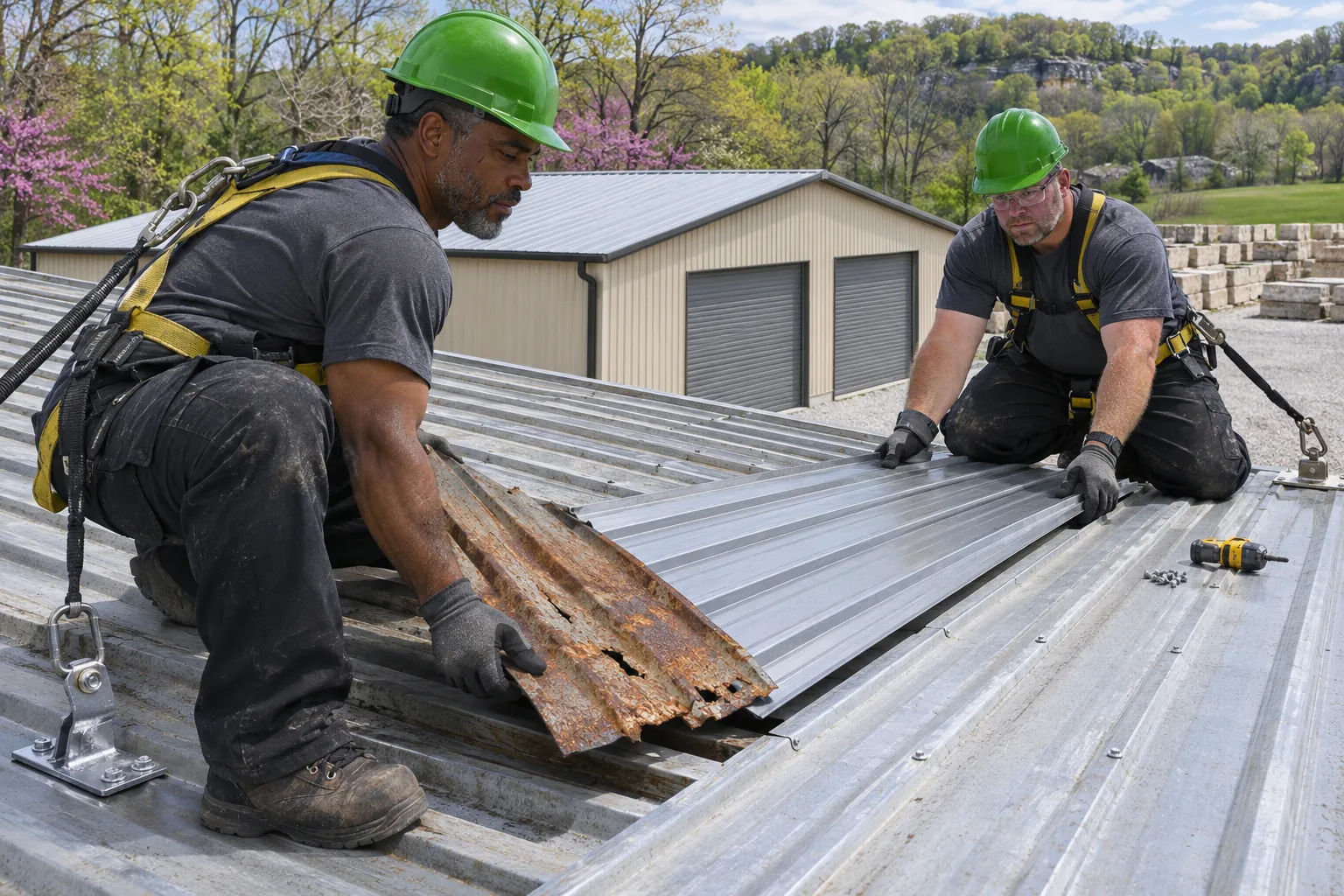
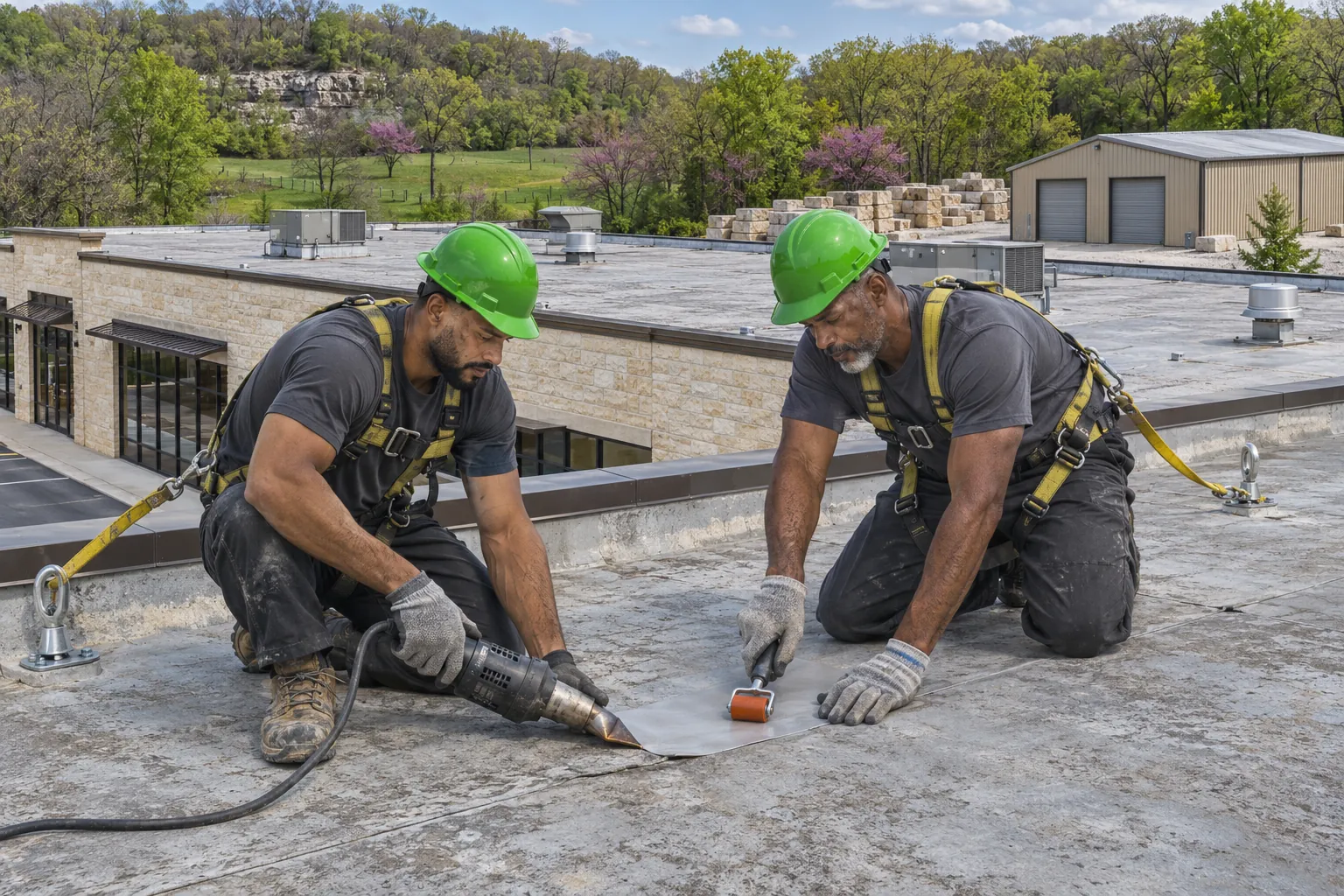
Damaged sections in traffic paths are cut out and replaced, and walkway pads go down where crews cross often.
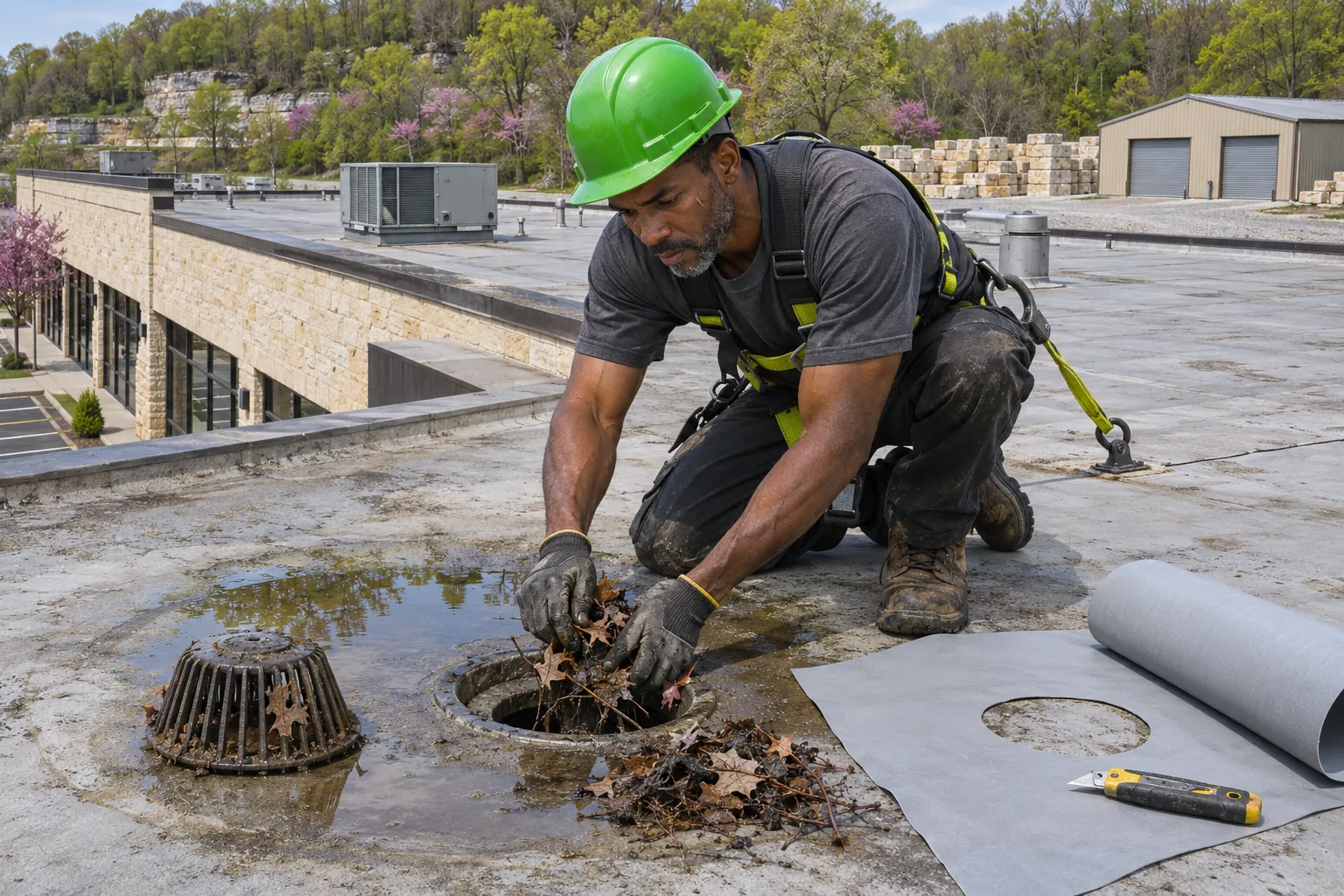
Interior drains are cleared and reflashed, and split valleys are rebuilt so water reaches the drain again.
A plant roof before and after a repair round.
Water over machinery needs a plan before the roof is opened. Book a visit and we will map the repair around your shifts.
Four steps keep plant work predictable for the people inside.
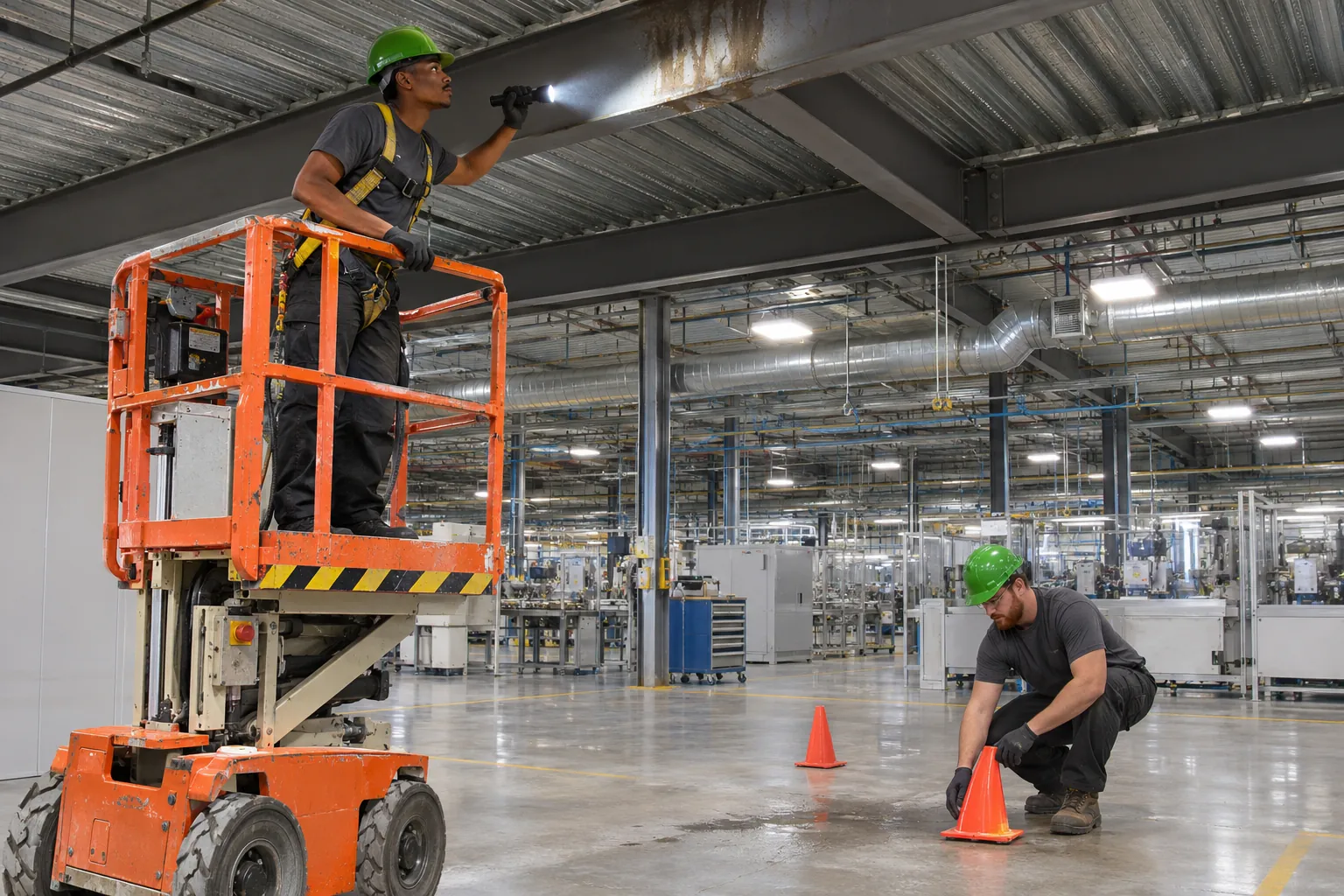
Work zones, lift or crane access, and safety setups near running equipment are set with your plant contact first.
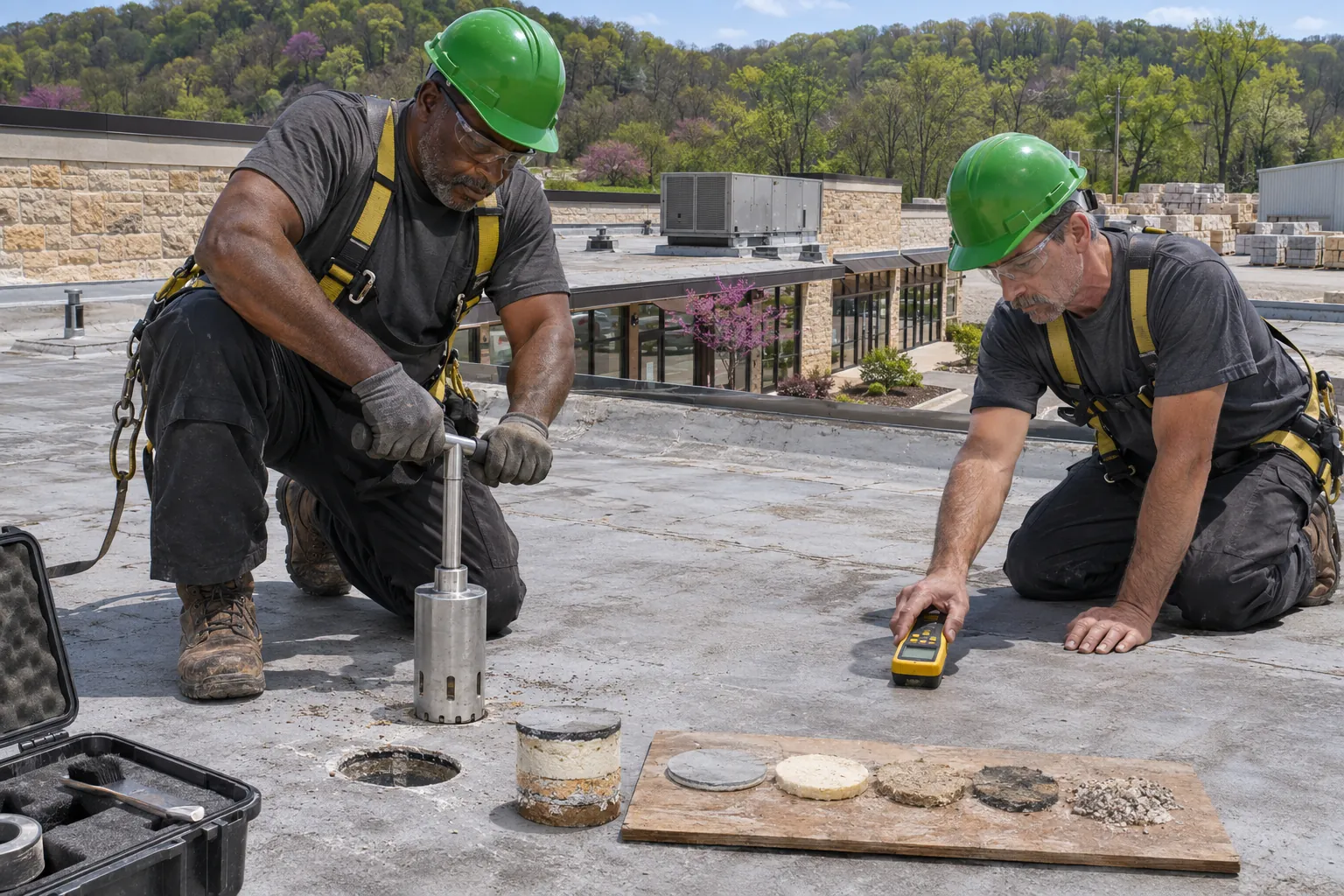
Membrane, panels, seams, curbs, ducts, and drains are checked, with cores where insulation looks wet.
Each zone is opened and closed inside its work window, with protection over the floor below.
Photos and a ranked list of remaining items let you plan the next round of work around production.
Plants often mix flat membrane roofs, steel additions, and leaks that need tracing.

Seams, drains, and blisters on low-slope membrane roofs.

Rusted panels, open laps, and loose screws on steel roofs.

Tracing a ceiling stain back to the roof opening.
Plant managers and owners ask these before booking repair work.
Maintenance covers clearing drains, checking seams and flashings, inspecting curbs, ducts, and equipment supports, and fixing small defects before they leak. Over controlled production areas, interior protection and timing are planned with the plant. Visits in spring and fall catch most problems before they reach the space below.
The full roof is checked, including membrane or panels, seams, flashings, drains, and equipment supports, with an eye out for damage from stone dust and vibration. Cores or moisture scans test insulation where needed. You get photos and a written list ranked by urgency, so work can be scheduled around production.
Roof size and height, the amount of damage, the roof system, rooftop equipment, and working around running production all move the price. Lift or crane access and safety setups near operating machinery add steps. A free on-site estimate sets the price once the roof has been seen.
Look for a roofer who works on large low-slope and metal roofs, plans safety around running equipment, and schedules around your shifts. Ask how production below will be protected, how leaks get traced, and how findings are reported. Written scopes with photos make bids easier to compare.
Some can. Items that let water reach equipment get fixed first, and work that needs the line stopped, such as reflashing a large fan curb, can be held for a planned shutdown and listed that way.
Crews cross the same paths to fans and units every week, and boots wear membrane thin. Walkway pads take that traffic, and they are cheaper to replace than a worn membrane section.
Residue from exhaust and stone dust keeps sealant and adhesive from bonding, so the work area is cleaned down to bare membrane or steel before any patch goes on.
Share your plant contact and the areas that concern you. We will set work zones around production and price the repairs.