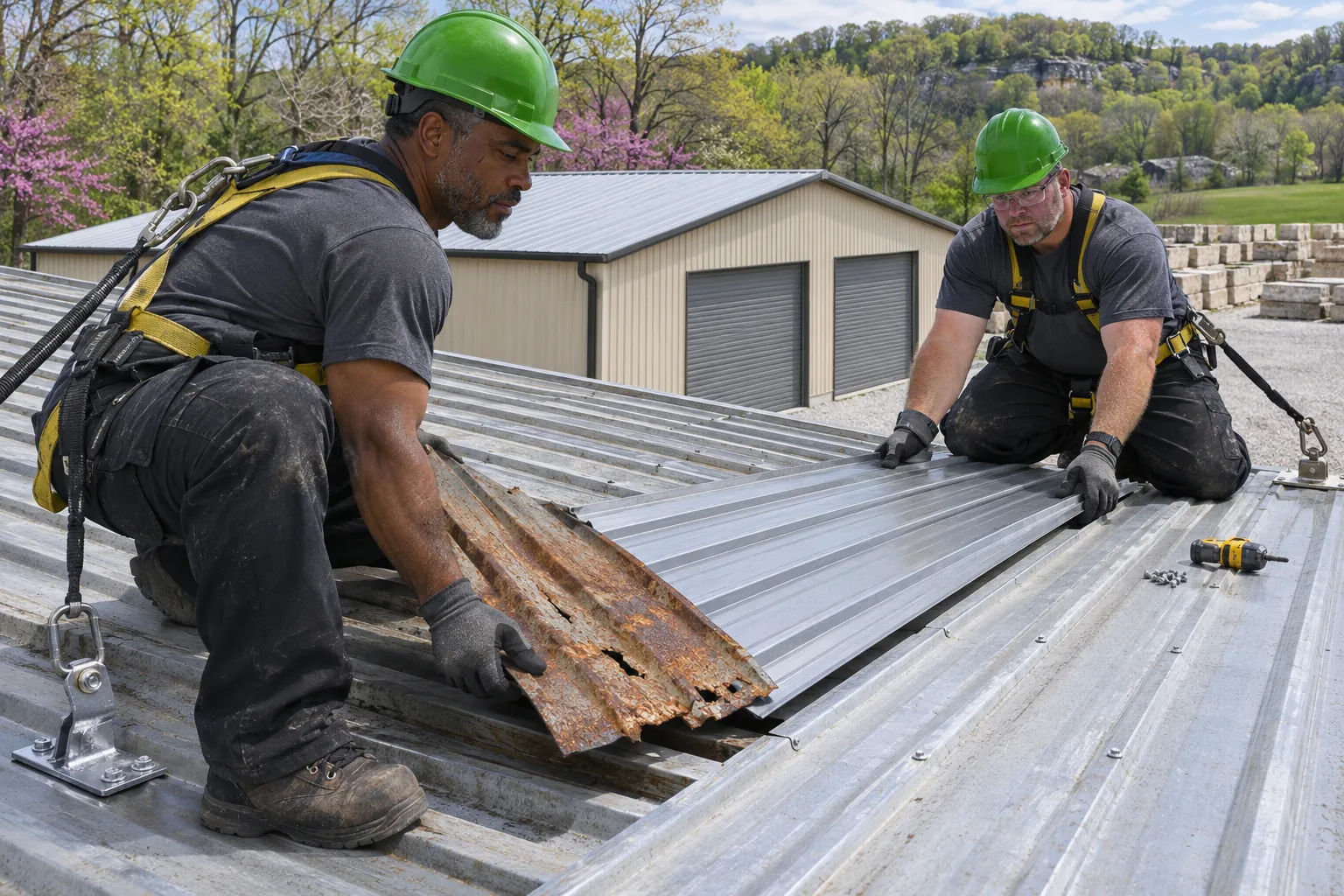
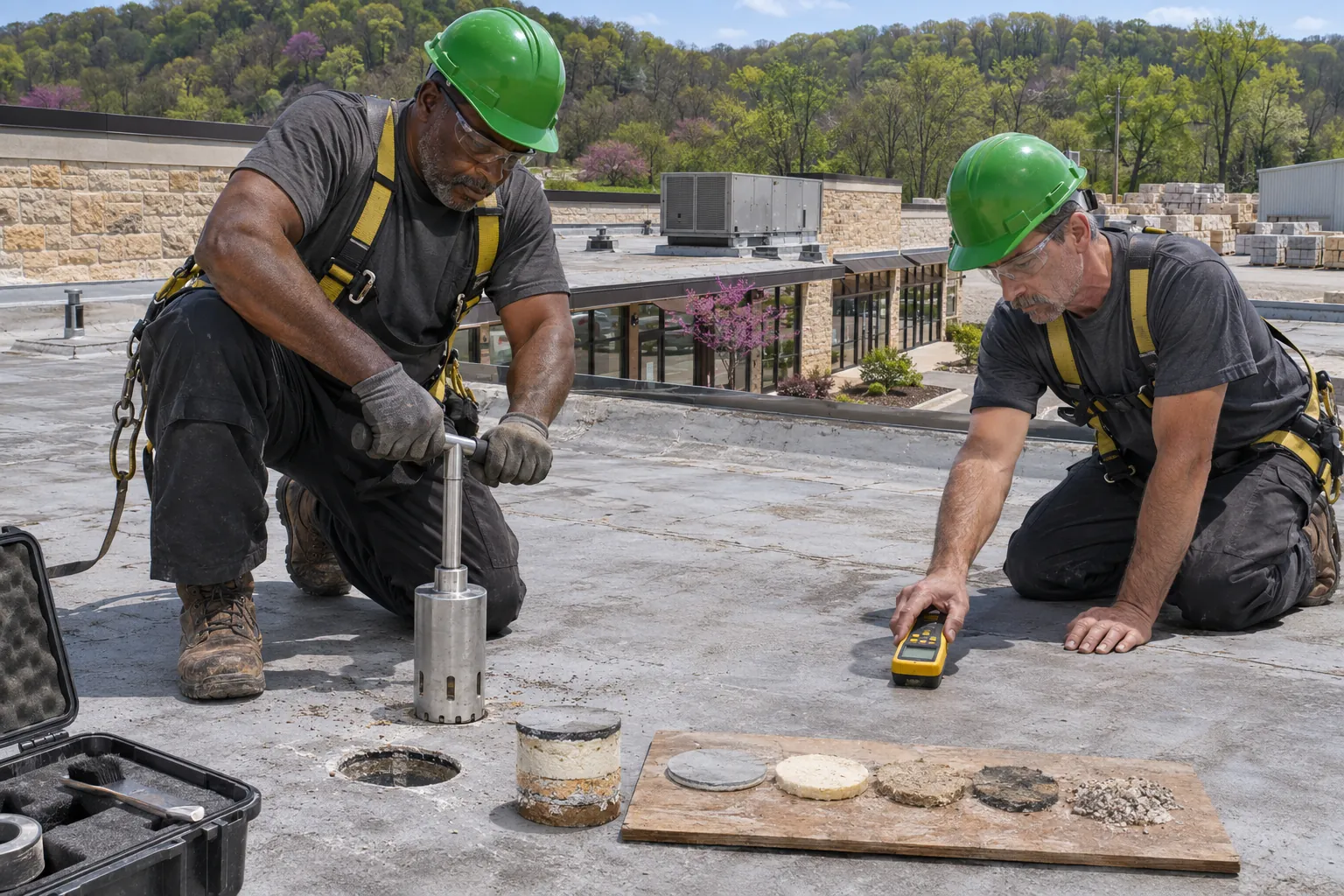
Repair The Roof
- Panels
- Most panels solid and tight
- Rust
- Surface rust, a few holes
- Laps And Seams
- Open in a few runs
- Framing
- Purlins straight and solid
- What You Get
- New panels and sealed laps where needed
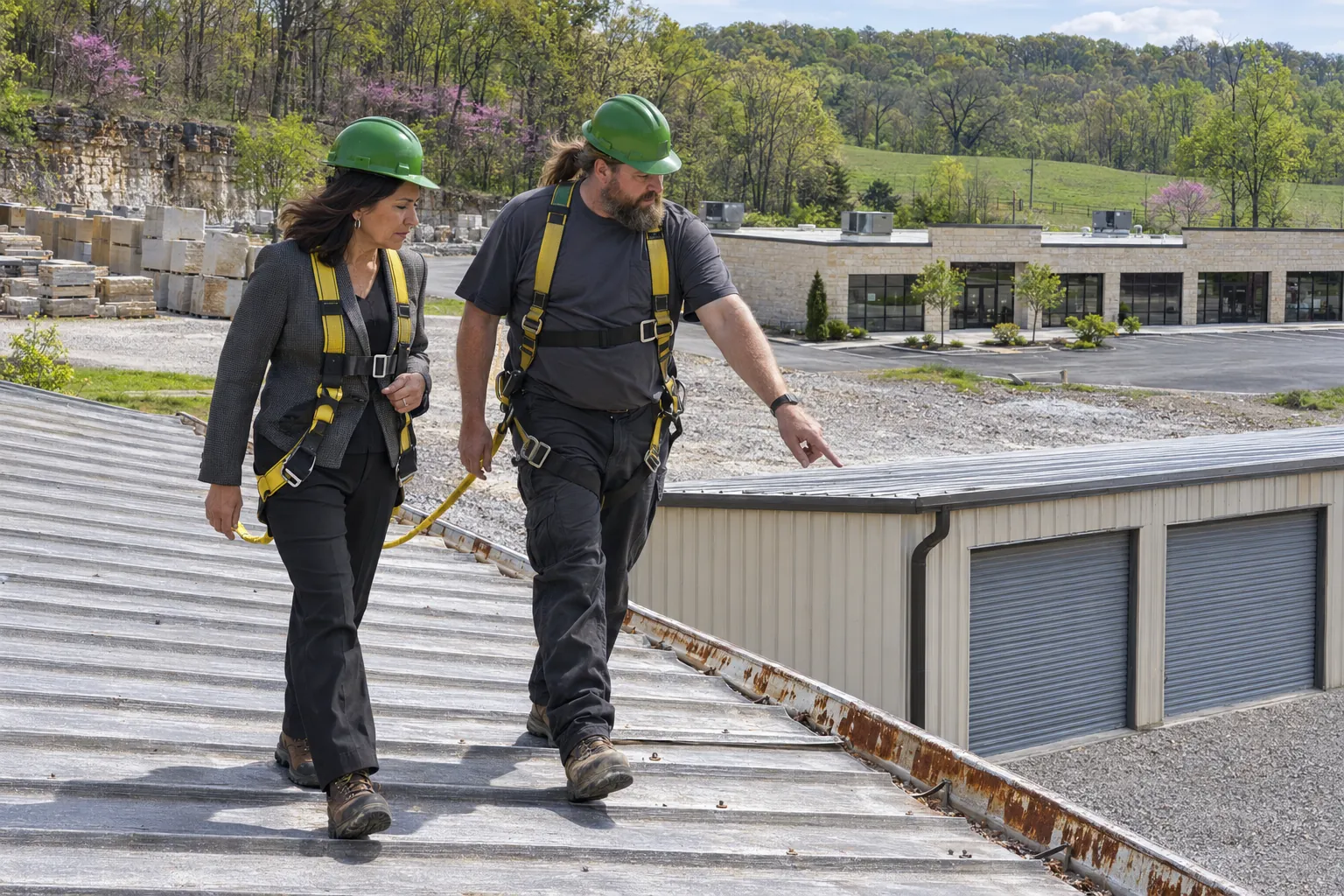
We handle Bloomington commercial metal roof repair on warehouses, shops, and storage buildings, from one rusted panel to a full row of open laps.

Bloomington commercial metal roof repair covers most steel roofs whose panels and purlins still hold. The rows below show where a full replacement starts to make more sense.


Steel roofs leak at the joints first. These are the indoor signs and the roof details behind them.
Water runs down the inside face of an endwall or collects on a sill.
Trim at the rake has loosened, or the closure strips under it have shrunk and opened.
Small rust spots or drips line up in rows across the ceiling liner.
Neoprene washers have cracked with age and screws have backed out as the panels moved.
Light shows through where two panels meet on a sunny afternoon.
Side or end laps have opened, and the sealant tape between them has dried out or slipped.
Rusty water marks pallets or racks near the eave.
Rust has eaten through panels at the eave or along a gutter line where water sits.
Each repair keeps the panel profile and fastening pattern the building already has.
Rusted sheets come off and same-profile panels go on, lapped and sealed at both sides and ends, with the purlins below checked first.
Backed-out and stripped screws come out; oversized screws with new washers go in at the spacing the panel maker calls for.
Laps get cleaned, stitched with added screws where they gap, and sealed with butyl tape, mastic, or reinforced seam fabric.
Light rust on panels next to a repair is wire-brushed and primed so corrosion stops spreading into the new steel.
Here is how a steel roof reads before and after a repair visit.
Eave rust spreads fastest where water sits. Book a visit and we will mark which panels need replacing and which can be treated.
Four steps keep steel work orderly on an occupied building.
A roof walk checks each lap, fastener row, ridge, eave, and trim run, and marks panels that flex or show holes.
You get a list of panels to swap, screws to change, and laps to seal, with photos that match each item.
Rusted panels come out one at a time, so the roof stays closed at the end of every work day.
Laps and trim get sealed, metal shavings get swept off the roof, and the photos of finished work come to you.
Steel buildings often have a low-slope office section or rooftop fans with their own needs.

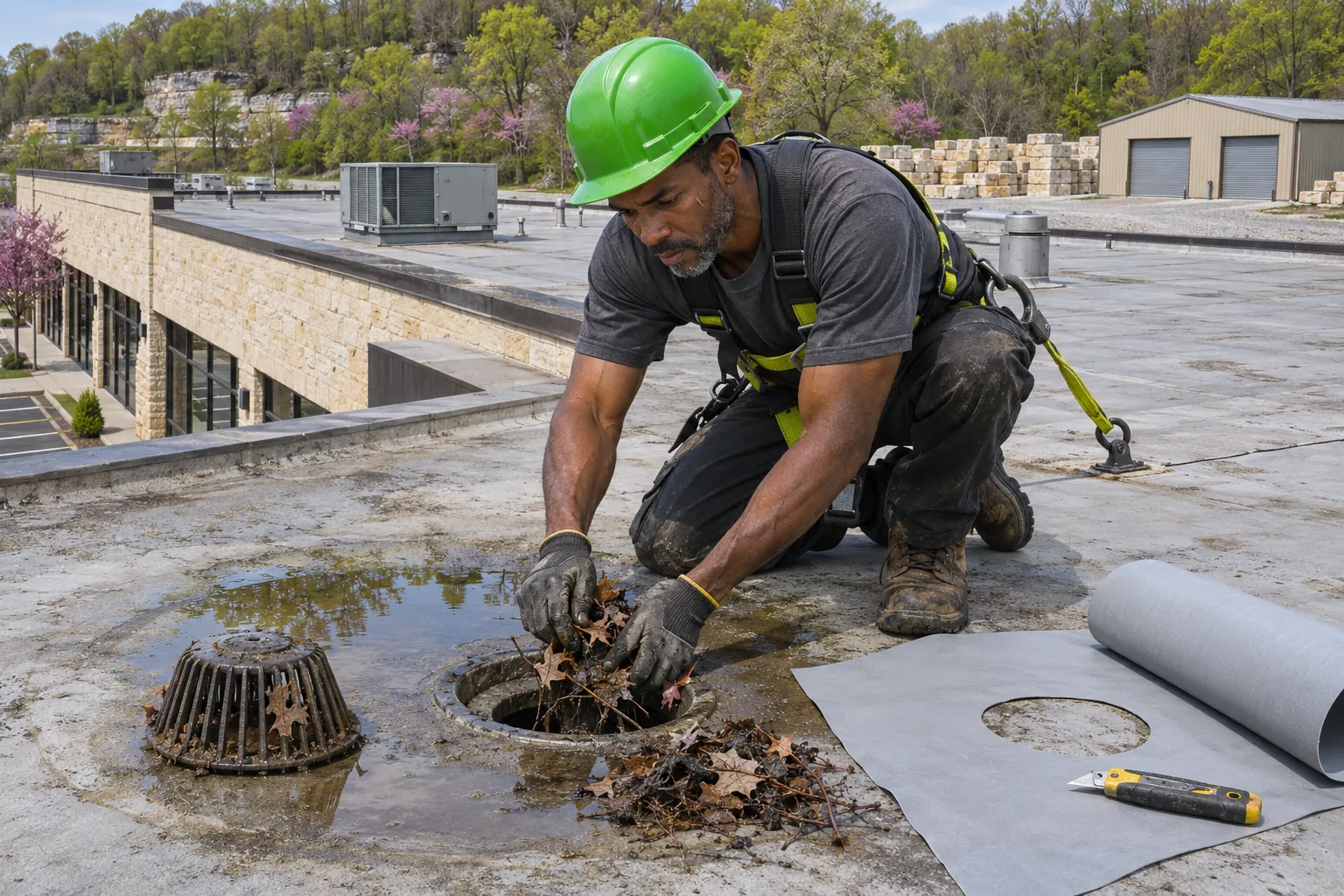
Seams, drains, and blisters on low-slope membrane roofs.

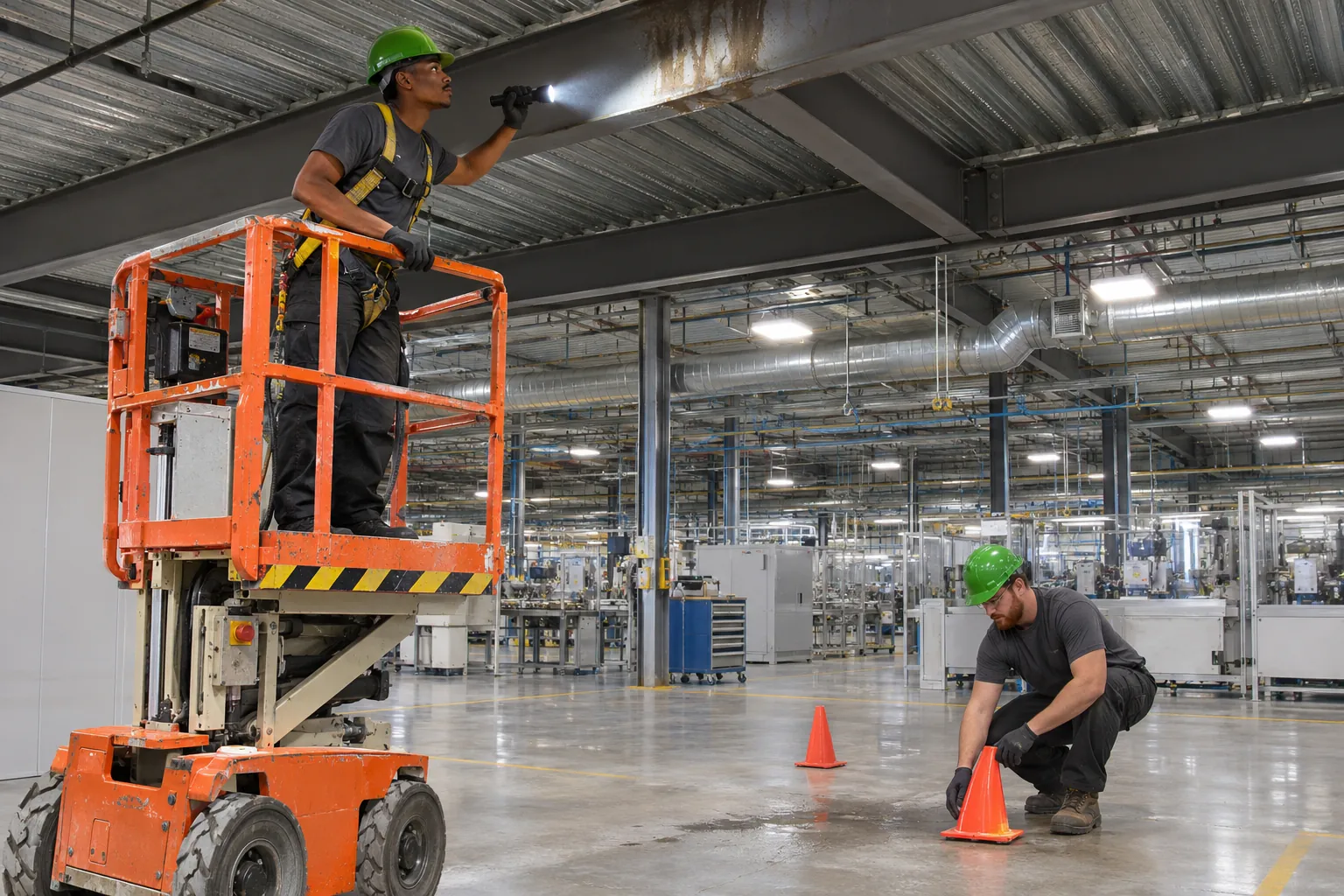
Tracing a ceiling stain back to the roof opening.

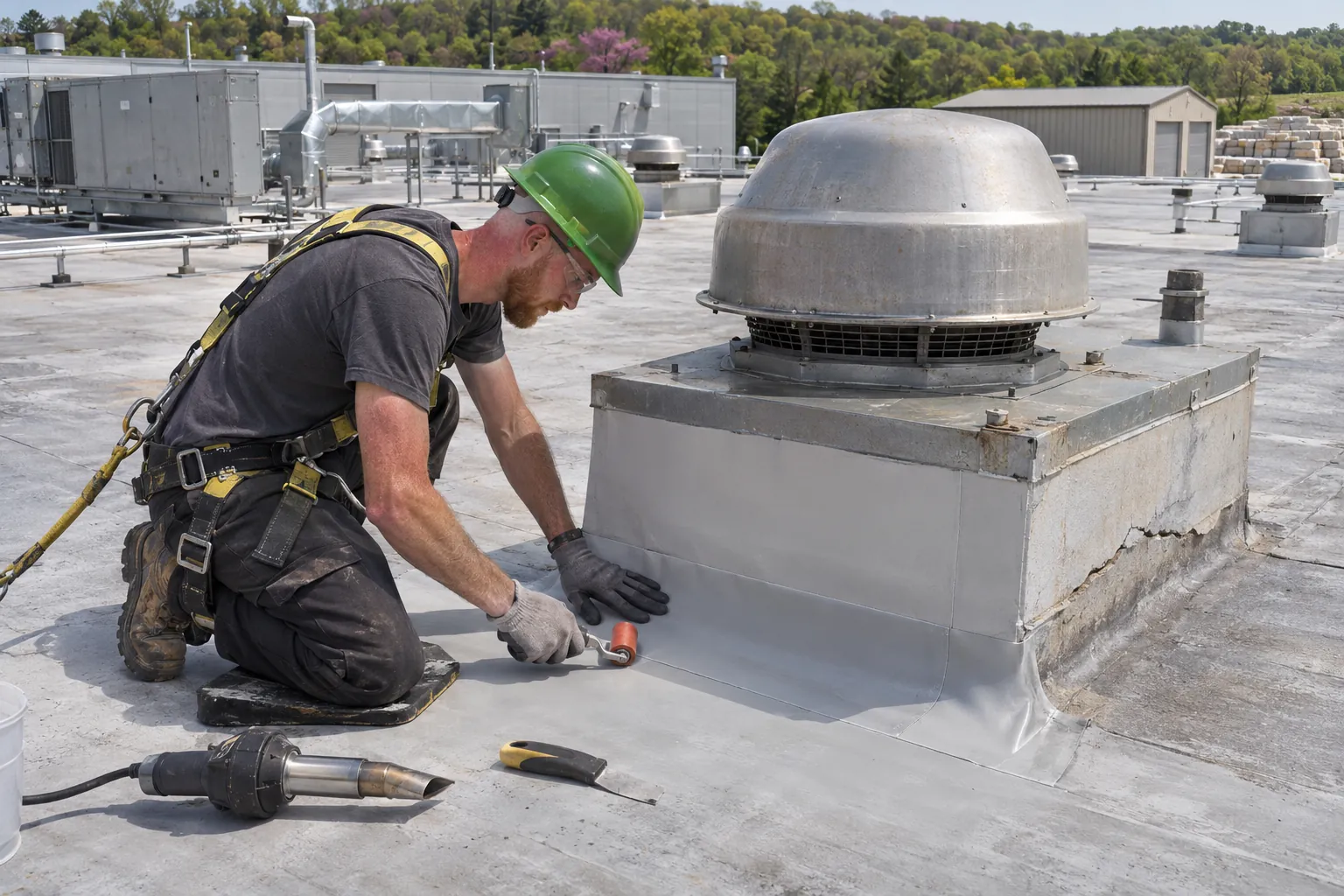
Plant roofs with fans, ducts, and busy floors below.
Answers owners of steel buildings ask for most often.
The rusted panel comes off, the purlins under it are inspected and treated, and a matching panel goes on with sealant at the side and end laps. Fresh screws and washers go in at the correct spacing. Panels around it with light rust are cleaned and primed so corrosion does not creep into the new sheet.
Seams are cleaned, opened laps get added stitch screws, and the joint is sealed with butyl tape, mastic, or reinforced seam fabric. Standing seam roofs get loose seams re-crimped and clips reset. Ridge, eave, and end-lap seams take the most water, so those get extra attention.
Most can be repaired when the panels and framing are largely intact. Fasteners, laps, flashings, trim, and single rusted panels all have repairs. Once rust has holed panels over much of the roof or the purlins are damaged, replacement becomes the better spend, and a close inspection settles which side a roof is on.
Many commercial steel roofs last 30 years or more; panel type, gauge, finish, and upkeep set where a roof lands. Exposed-fastener roofs need screw checks over the years, while standing seam roofs have fewer openings. Clear gutters, early rust treatment, and sealed laps push a roof toward the long end.
Drips that show up on cold mornings with no rain often come from condensation under the panels, especially where the liner is torn. Drips that follow rain point to the roof. We check both, since the repair is very different.
Yes. Eave gutters, end caps, downspout outlets, and rake trim are part of metal roof repair, because water backing out of a clogged gutter is a common cause of eave rust.
Send the building address and where the drips land. We will walk the panels and list what needs replacing and what can be resealed.