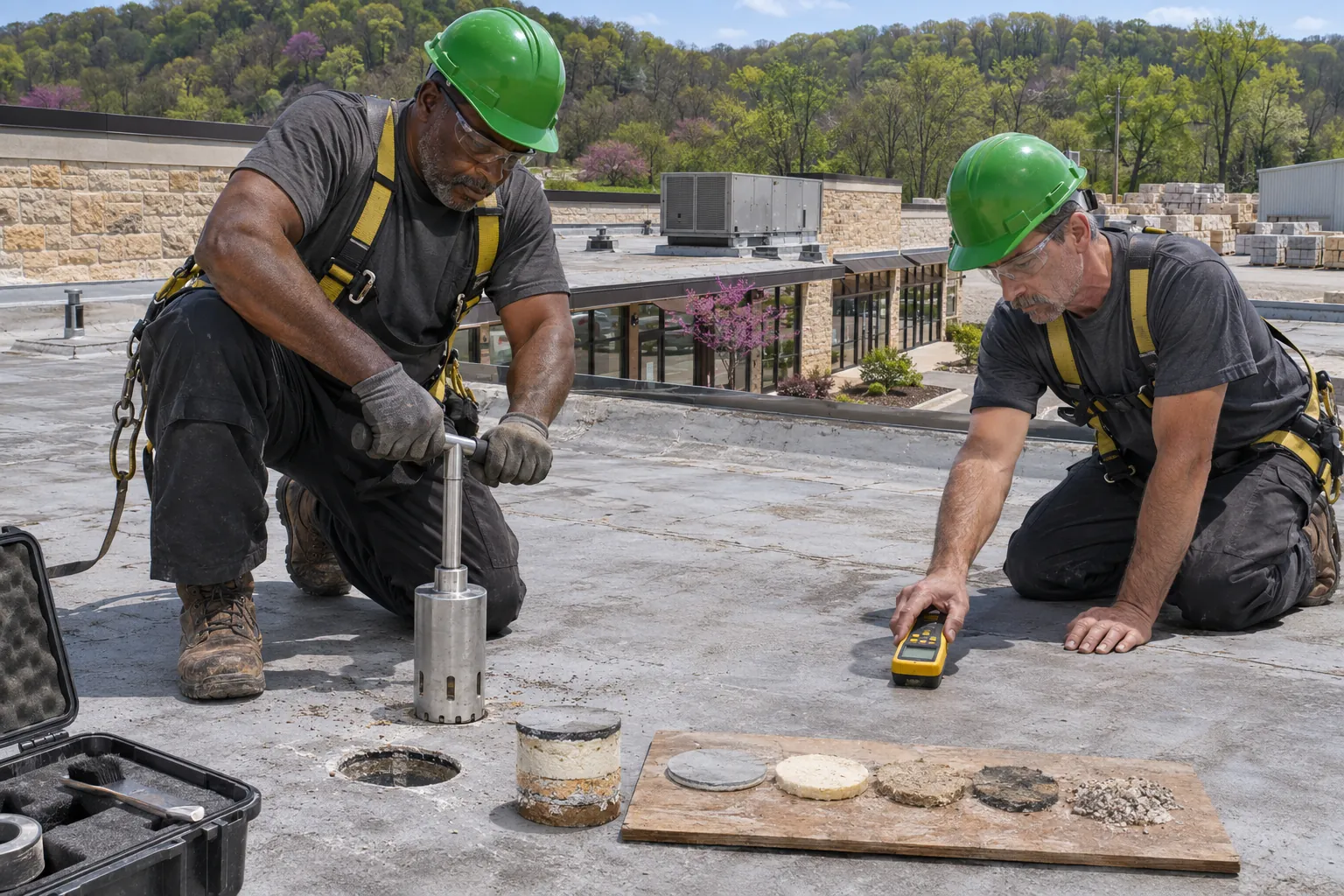
Repair The Damaged Areas
- Membrane
- Flexible, seams hold when probed
- Insulation
- Dry in most cores
- Leak Pattern
- One or two spots
- Drains
- Flashing failed at the bowl
- What You Get
- Patched areas tied into the field
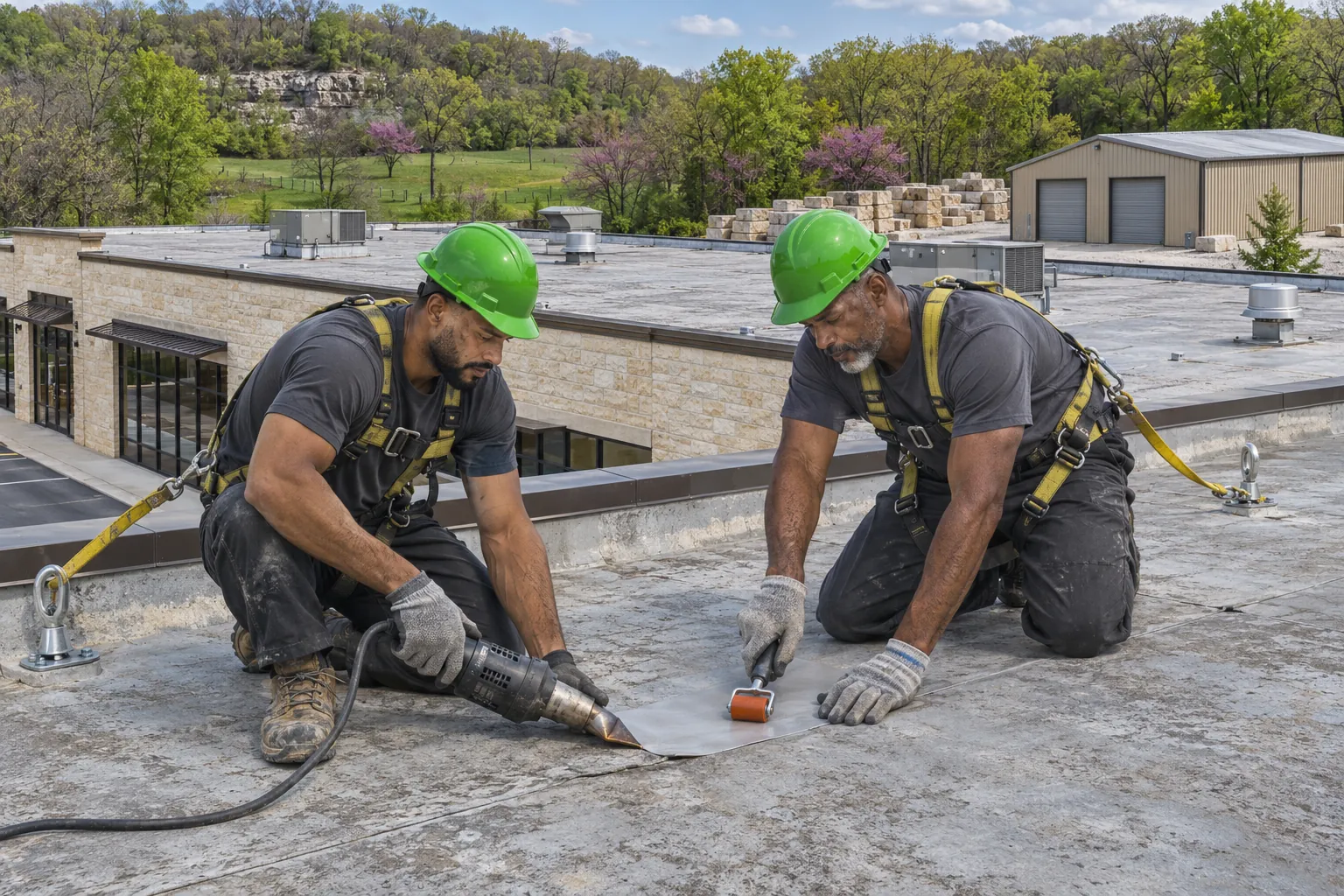
As a Bloomington flat roof repair contractor, we patch membrane, rebuild drain flashing, and replace wet insulation on commercial low-slope roofs.

Bloomington flat roof repair makes sense while the membrane still bends without cracking and the insulation under it is dry. These rows show where the line usually falls.


Most calls start with something seen indoors. Each row pairs that sign with what is usually waiting on the membrane above it.
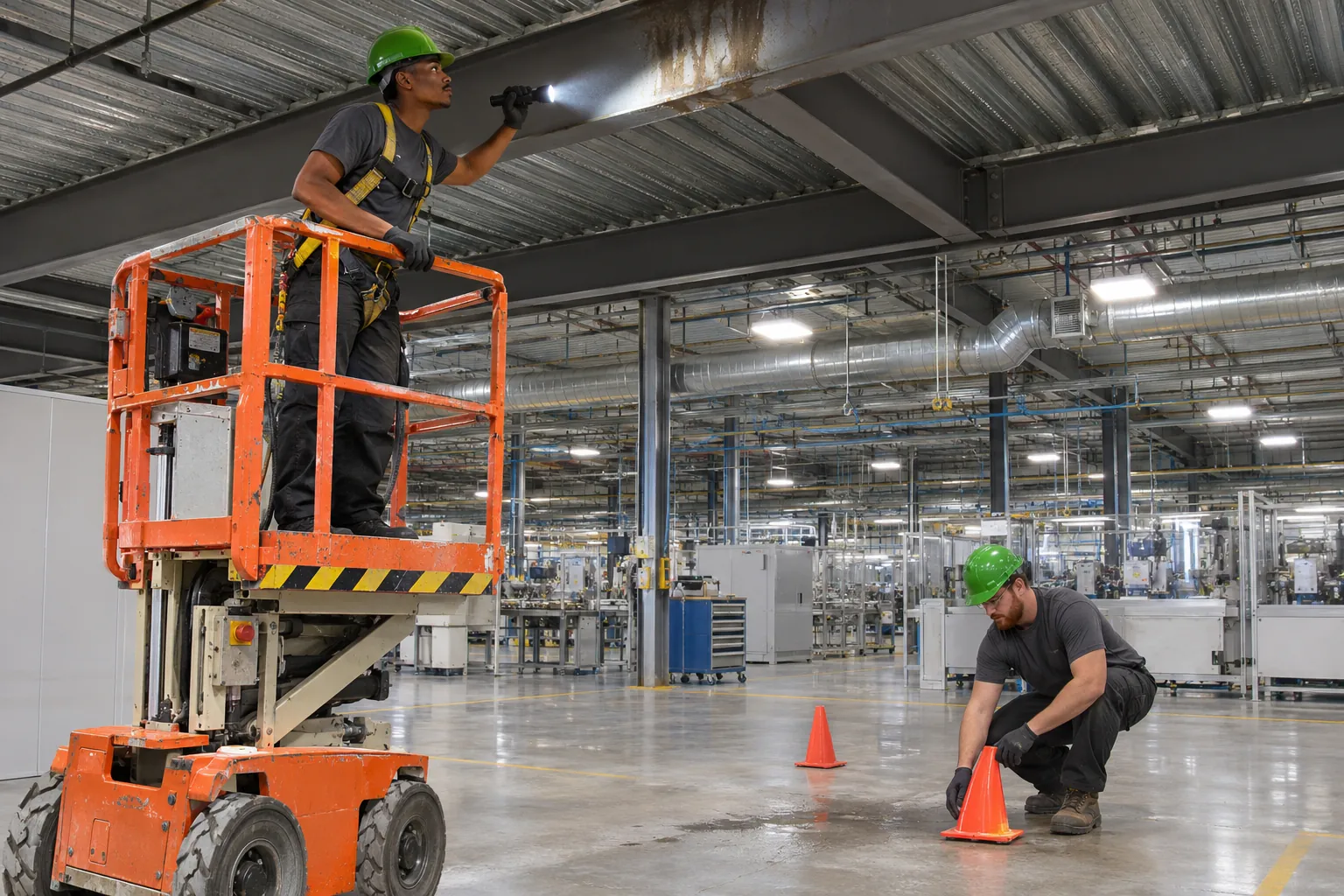
A brown ring on the ceiling tile next to a column line, larger after each heavy rain.
Water ponds at a low spot and works into a seam that lost its weld or adhesive.
Water runs down the drain pipe inside and drips from the first joint below the roof.
Flashing at the drain bowl has torn, or the clamping ring is loose or cracked.
Staff on the roof report a section that feels spongy when walked.
Insulation under the membrane is soaked and crushing, so the membrane flexes with each step.
Ceiling looks fine, but a roof walk turns up raised domes on the membrane.
Blisters form where trapped moisture or air lifts the layers; once one splits, water follows.
The fix matches the membrane already on the building, so the patch moves and ages with the roof around it.
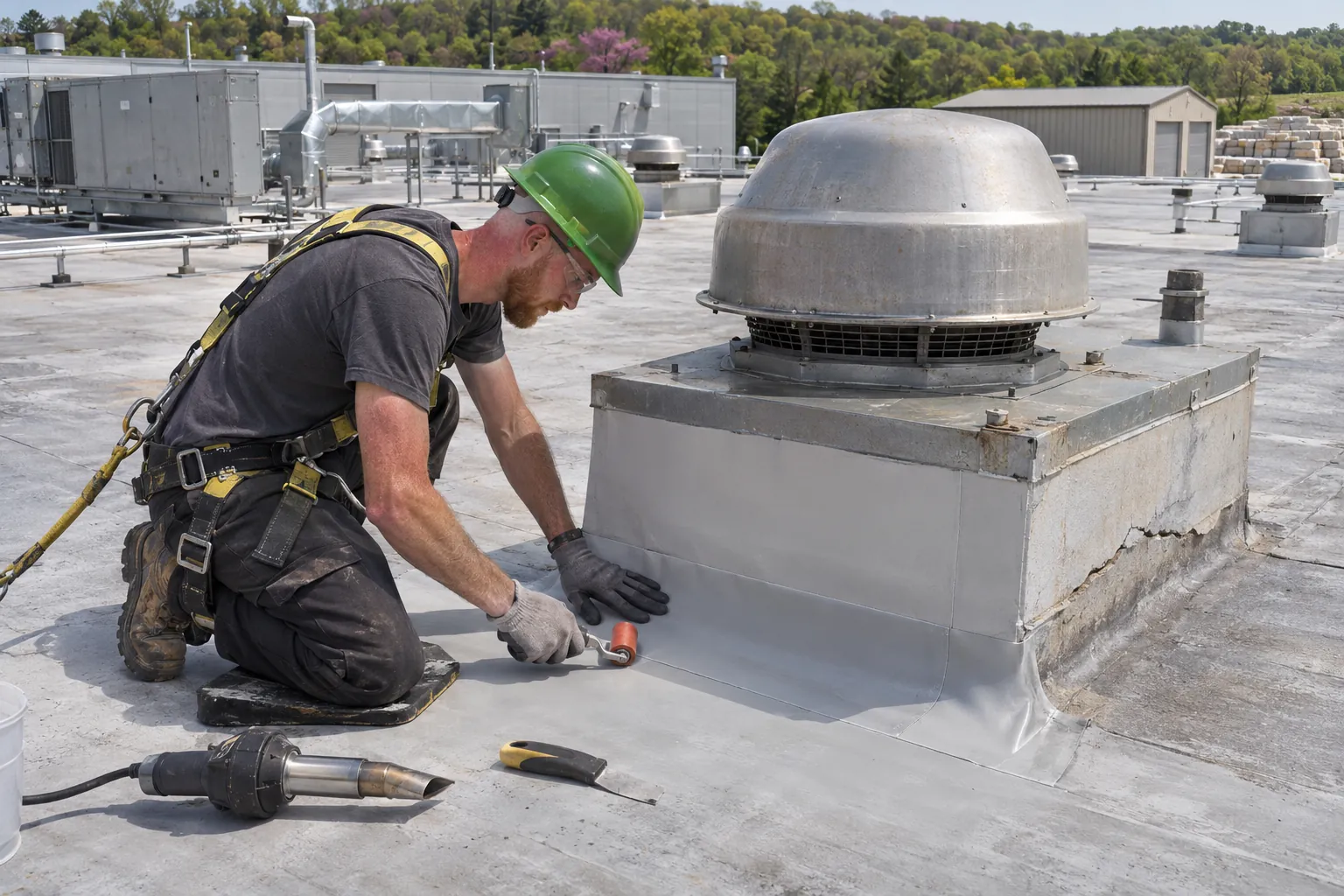
Hot air welds a new TPO patch to cleaned, prepped membrane. Each weld is probed along its edge before the crew moves on.
Primer goes on first, then pressure-sensitive cover tape or an adhered patch, rolled down so no channel is left at the edge.
Compatible plies are set in over the damaged area, with the cut edges sealed so water has no path under the new layers.
Cores mark where the board is wet. That section is cut out, replaced with dry board, and covered before rain is back.
These are the roof conditions before and after a typical membrane repair.
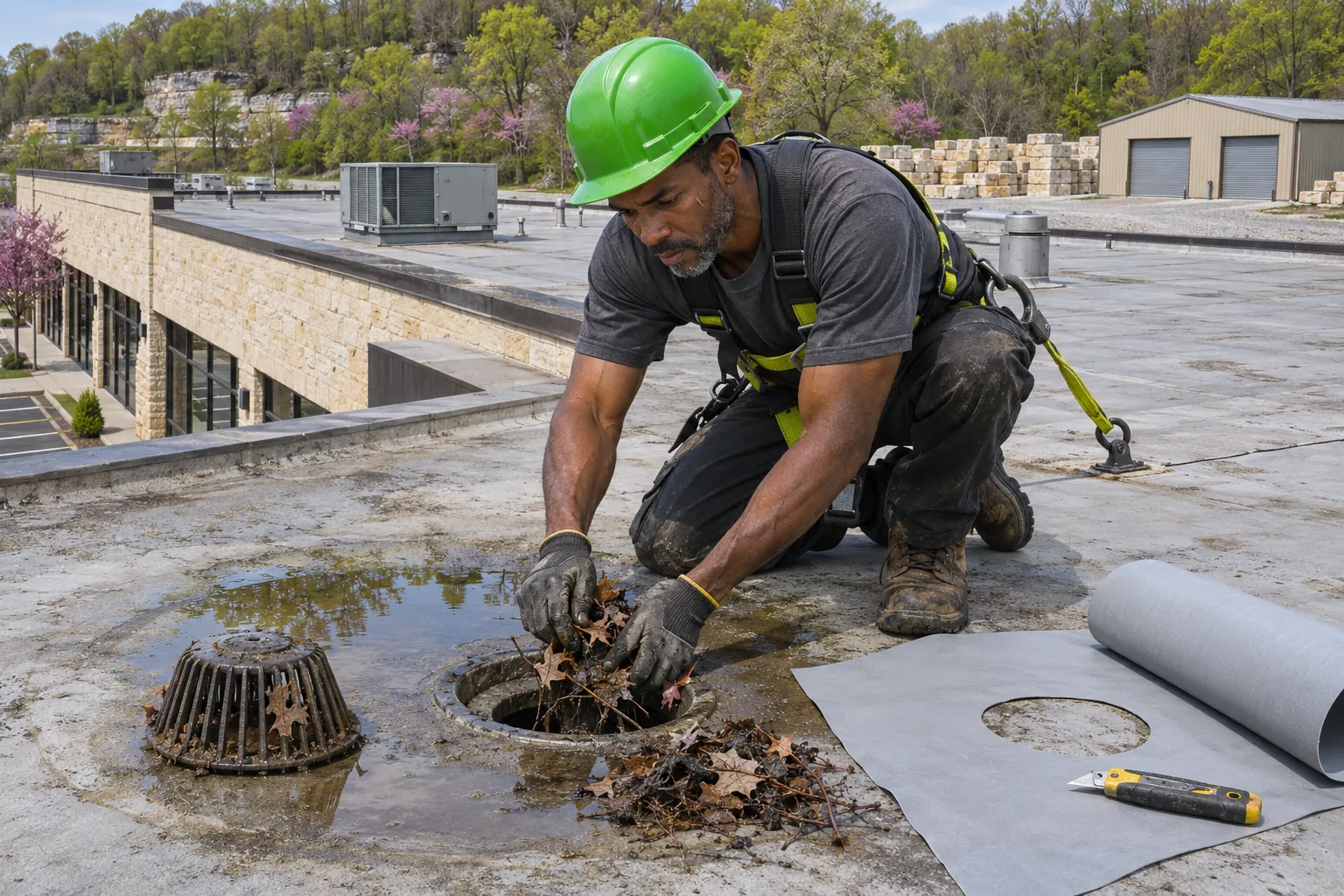
Standing water at a drain bowl usually means debris or a failed flashing. Book a visit and we will check the bowl, the ring, and the membrane around it.
Four steps take a flat roof from a leak call to a closed repair.
A full walk of the field, seams, edges, and drains comes first, with cores where wet insulation is suspected.
Every defect is photographed and listed by urgency, so the price covers the repairs the roof needs now.
Damaged membrane is cut back, wet board is replaced, and the patch is welded, taped, or set in plies to match.
Seams get probed, drains get cleared, and you receive photos of each finished patch for your records.
Flat roofs often sit beside metal additions or carry equipment that needs its own repair.

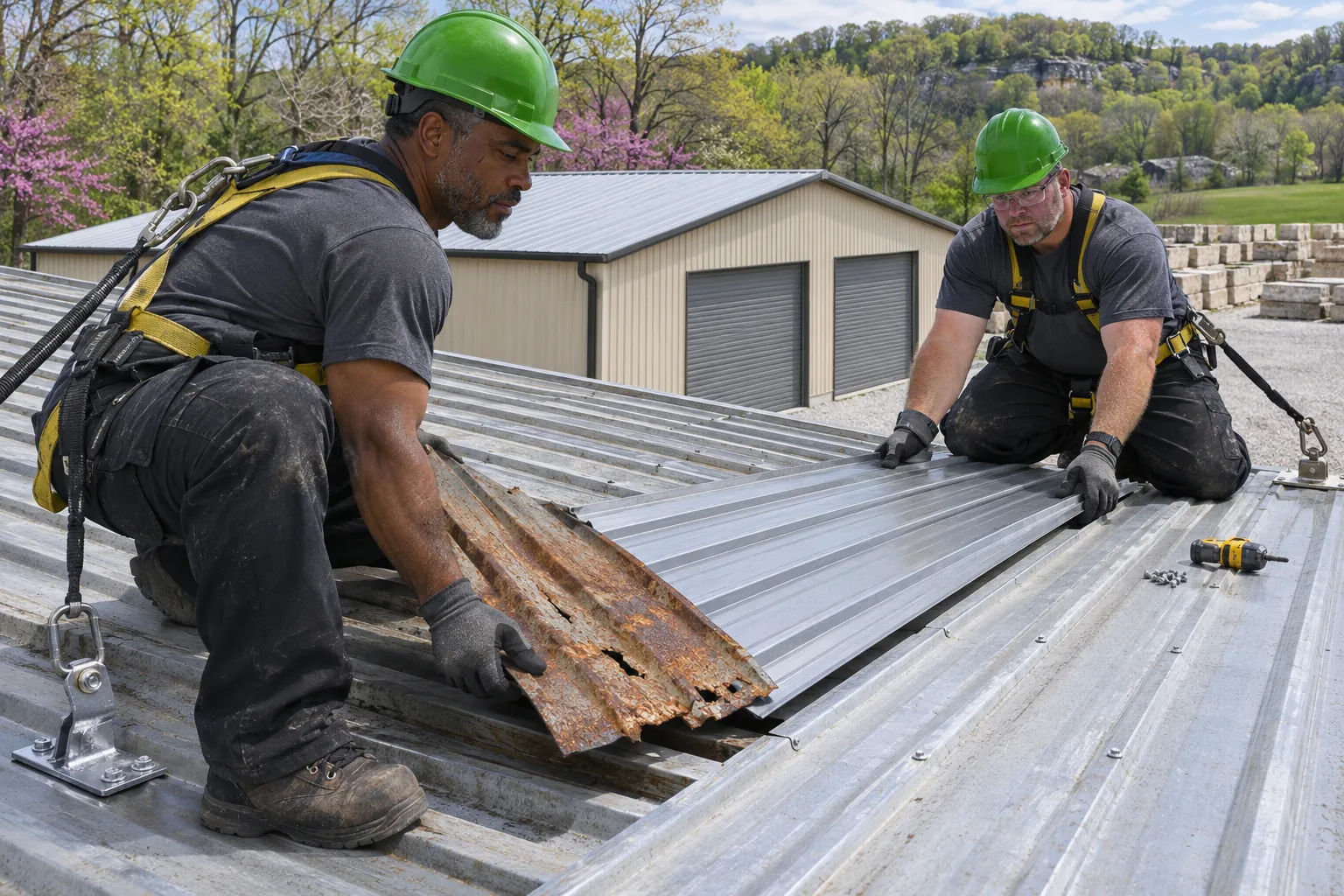
Rusted panels, open laps, and loose screws on steel roofs.

Tracing a ceiling stain back to the roof opening.

Plant roofs with fans, ducts, and busy floors below.
Short answers to what owners ask before a membrane repair.
Patching fits a puncture, an open seam, or a failed flashing on membrane that still flexes and sits over dry insulation. Replacement comes into the picture when patches keep multiplying, the membrane cracks or pulls back at the edges, or cores show wet board across wide areas. We check both the surface and the cores before advising.
The crew clears debris, lifts the strainer, and checks the clamping ring, its bolts, and the membrane flashing in the bowl. Most drain leaks trace to a cracked or loose ring or torn membrane at the bowl. Hardware gets replaced, the drain gets new membrane flashing, and any low spot keeping water away from it is corrected.
Price moves with how many areas are damaged and how large they are, the membrane type, how much wet insulation comes out, any drain or deck work, roof height, and access. Rain or winter conditions can add steps. A free on-site estimate looks at the real damage before a price is set.
Match the repair to the membrane in place: welded patches for TPO, primed tape or adhered patches for EPDM, and compatible plies on built-up or modified bitumen. Stone dust settles on mill roofs, so the work area gets a thorough cleaning first. Wet board is cut out so the patch sits on dry, firm insulation.
Often, yes. Heat-welded TPO patches go down in cooler weather than most adhesives allow, and temporary repairs can hold a leak until a warmer stretch. Membrane makers publish temperature limits for primers and adhesives, and we schedule adhered work inside them.
Intact blisters get marked and watched on each visit. A blister that has split, sits in a traffic path, or keeps growing gets cut out, dried, and patched, because an open blister lets water reach the deck.
Tell us where the water shows up and what the roof is made of. We will walk it, core it if needed, and price the repair.