Phase Planning
Findings are grouped into phases: active leaks first, then details close to failing, then upkeep items.

We take on Salem commercial roof repair for municipal buildings, small retail roofs, and metal shops, breaking larger repairs into phases.
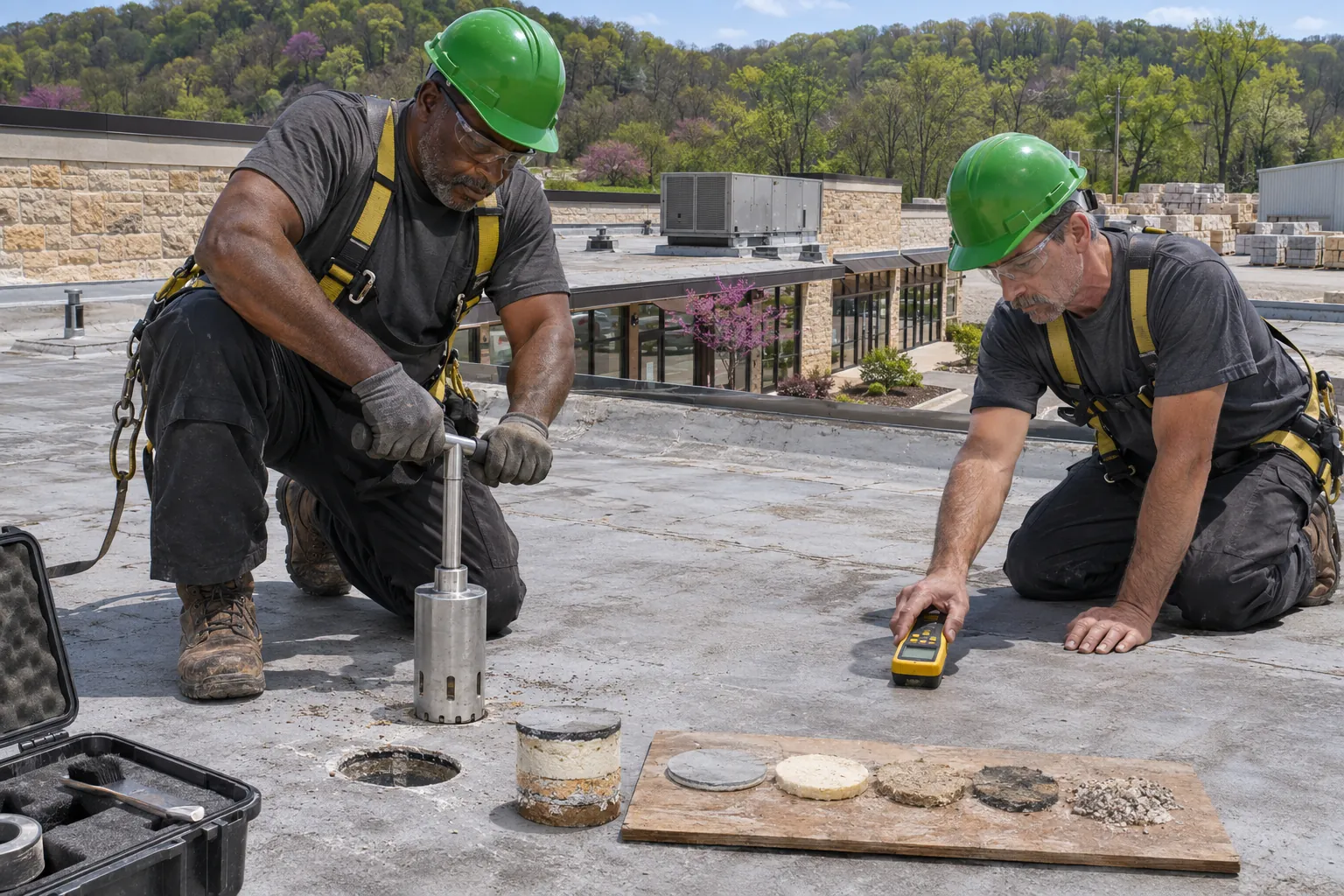
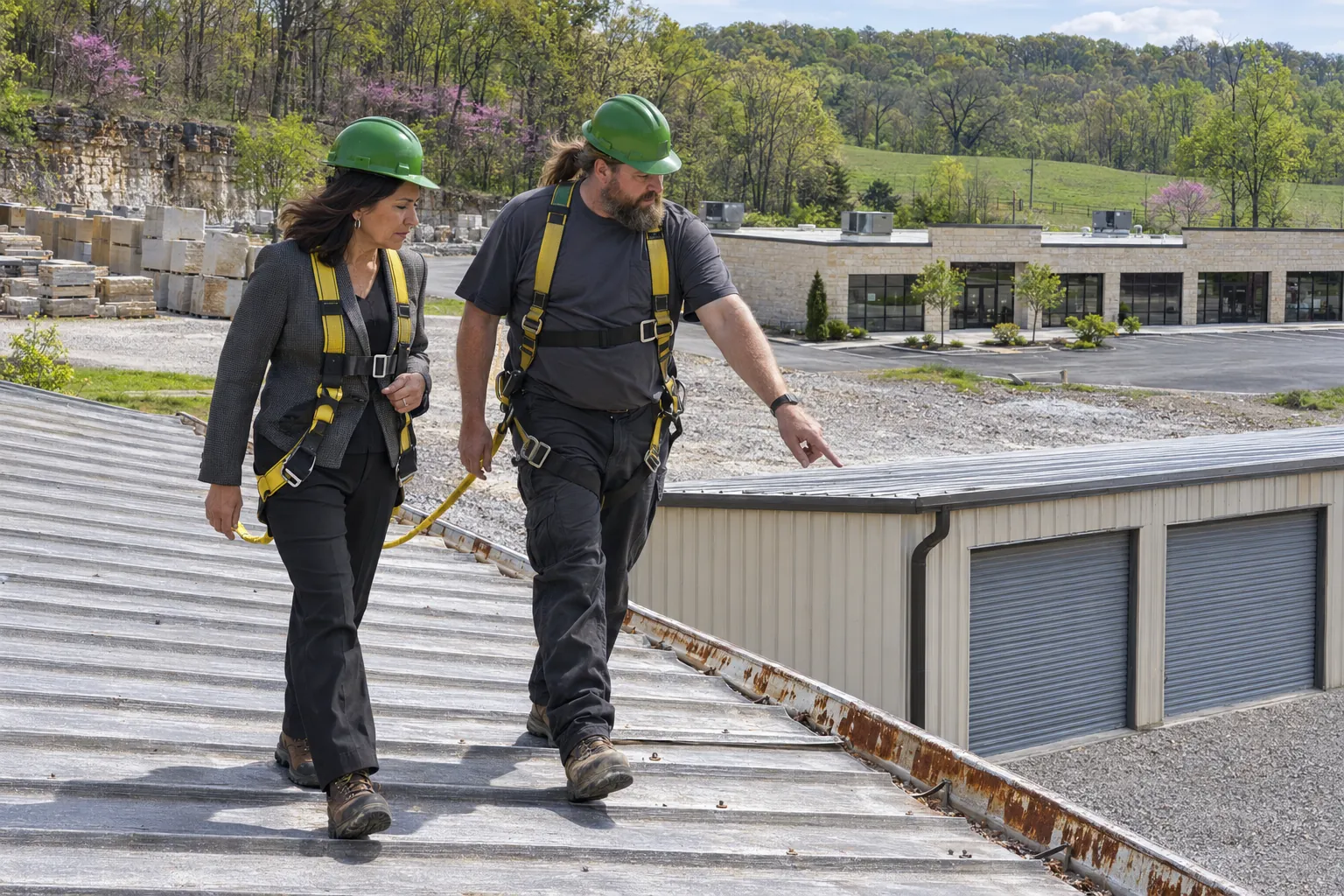
Salem commercial roof repair on bigger roofs often works best in phases, with the areas letting water in now handled first.
A ranked list lets a board, owner, or manager approve one phase at a time. For larger scopes, we also check whether the work calls for state building plan review, since Indiana requires it for Class 1 structures, which include most commercial buildings.
Municipal buildings and metal shops tend to carry years of repairs from different crews. The walk sorts out which old patches still hold and which are hiding an opening, so the first phase spends money where water is getting in today.
Older public and shop roofs tend to show several issues at once. These pairs sort them out.
Stains appear in more than one room after the same storm.
Several separate openings exist, often a mix of seams, curbs, and wall flashing.
Water drips onto work areas in a metal shop.
Laps and screws over the bays have loosened, and some panels have rusted at the eave.
Records show the same spot repaired three times.
Each patch went over the last, and the original opening was never cut out.
Rain sheets off the roof over a public entrance.
Gutters and downspouts are clogged or undersized for the roof area draining into them.
Maintenance staff report water standing on a flat roof section days after rain.
Drains are clogged or the deck has sagged, so water collects and works into the seams.
A Salem roof before and after a phased repair plan.
Bigger roofs get repaired in an order that matches the budget.
Findings are grouped into phases: active leaks first, then details close to failing, then upkeep items.
Bay laps get stitched and sealed, rusted eave panels get swapped, and screws get changed to oversized ones with new washers.
Clogged gutters are cleared, downspout outlets are opened up, and overflow points above entrances are corrected.
Ponding areas get drains cleared and reflashed, and low spots are built up so water reaches the drain.
A ranked phase list puts the worst openings first. Book a visit and we will sort your roof repairs into phases.
Four steps turn a long repair list into phases.
The whole roof is walked, so every opening is on one list before money is spent.
Findings are sorted into phases by how close each one is to letting water in.
For larger scopes, the need for state plan review is checked with the state and local offices.
Active leaks are repaired first, with photos sent so the next phase can be approved.
Municipal buildings, shops, and stores in these towns are where we repair roofs most. Elsewhere? Call us or send us a message.
Flat, metal, leak, and plant roof repairs in town.
Fall seam and fastener repairs before the freeze.
Hail checks and leak repairs on shops and offices.
Heat-worn seams on retail and office roofs.
Storage, shop, and office roofs in Monroe County.
What Salem owners and boards ask about larger repairs.
Indiana requires state building plan review for Class 1 structures, a group that covers most commercial buildings. Whether a roof repair needs a filing turns on its scope, so larger jobs get checked with the Indiana Department of Homeland Security and the local building office before they start.
Yes. Commercial and industrial roofs in Salem get repaired, from small retail and municipal buildings to metal shops. If your building sits outside the towns we list, call or send a message and we will tell you whether we can reach it.
Screws and laps, usually over the bays where heat and moisture from work inside meet cold steel. Eave panels come next, where water sits in gutters and rusts the panel ends.
A ranked phase list lets each phase stand on its own, with active leaks in the first one and upkeep items held for later.
A patch laid over failed patches covers the opening without closing it. Cutting back to good membrane and repairing once stops the cycle of repeat visits.
Whoever holds the budget: an owner, a manager, or a board. Each phase comes with its own photos and price, so it can be approved on its own without waiting on the rest of the list.
Around public hours and events. Entrances stay open, materials stay clear of walkways, and louder work is set for times when the building is quiet.
Each phase gets its own photos, scope, and date. Boards and managers can see what was repaired, what is next, and what was spent, which makes the next approval simpler.
Send the building address and a note on the leaks. We will walk it and give you a ranked phase list with prices.