

Repair The Leak
- Leak Count
- One area or a few
- Entry Point
- A curb, seam, drain, or wall
- Insulation
- Dry beyond the wet spot
- Roof Age
- Membrane or panels still flexible
- What You Get
- The opening closed and documented
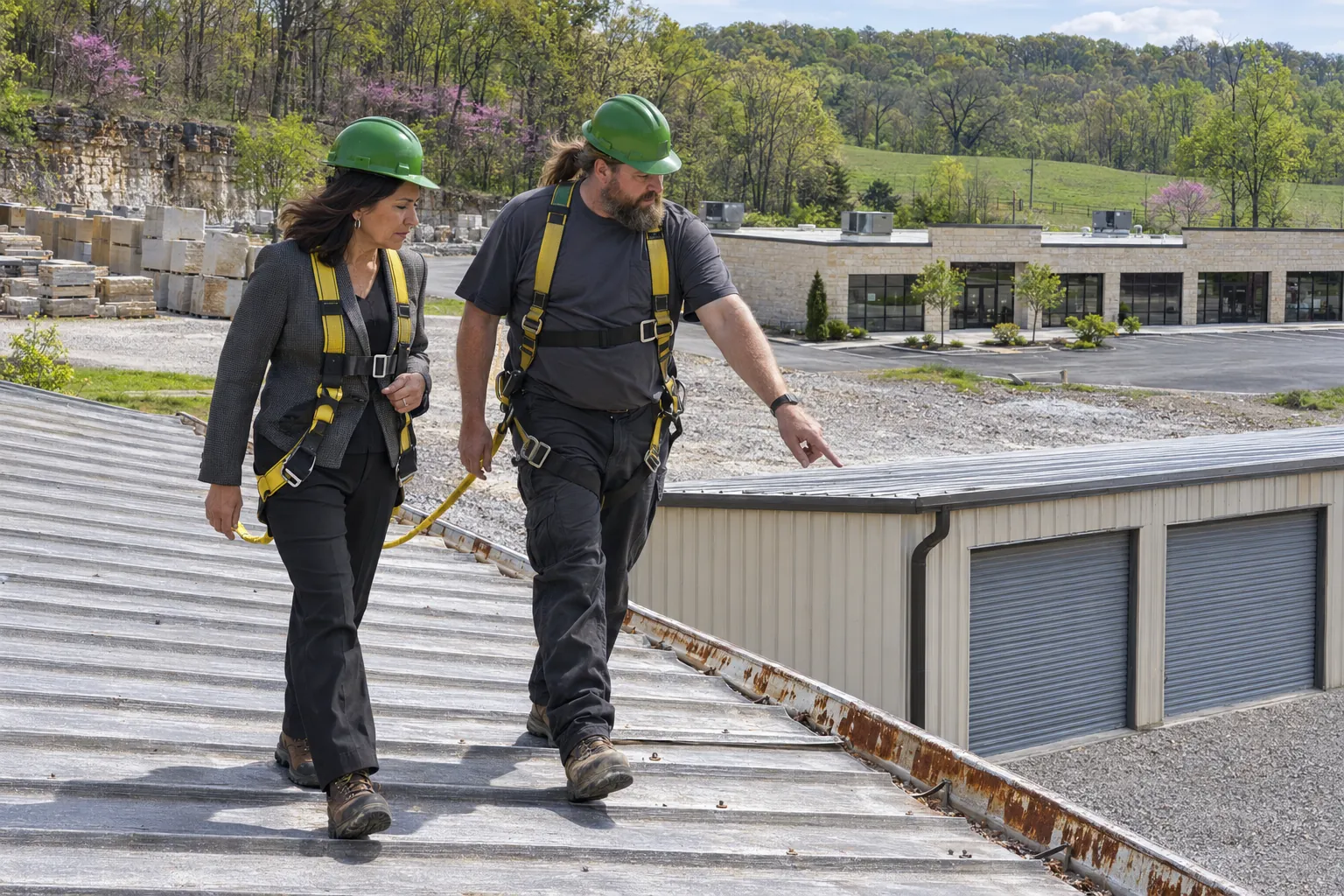
Our Bloomington commercial roof leak repair starts inside, at the stain, and follows the water up to the curb, seam, drain, or wall where it entered.

Bloomington commercial roof leak repair closes the opening that let water in. The comparison shows when one leak points to a bigger roof problem.


Where water shows up inside narrows down where it came in. These pairs cover the common ones.
Ceiling tile darkens right below or beside the HVAC unit, worse in summer.
Curb flashing has failed, the cabinet panels leak, or condensate drains onto the roof and back under the unit.
A stripe of stain runs along the top of an outside wall.
Wall flashing has pulled loose at the termination bar, or the coping joints above it have opened.
Water appears after snow melts, though the same roof stays dry in rain.
Ice in the drains backs meltwater up against seams and flashings that sit too low.
Drips land in the middle of a room with nothing on the roof above.
Water entered upslope and ran along the deck or a purlin before it found a joint to drop through.
Once the entry point is found, the repair targets that detail and the water path around it.
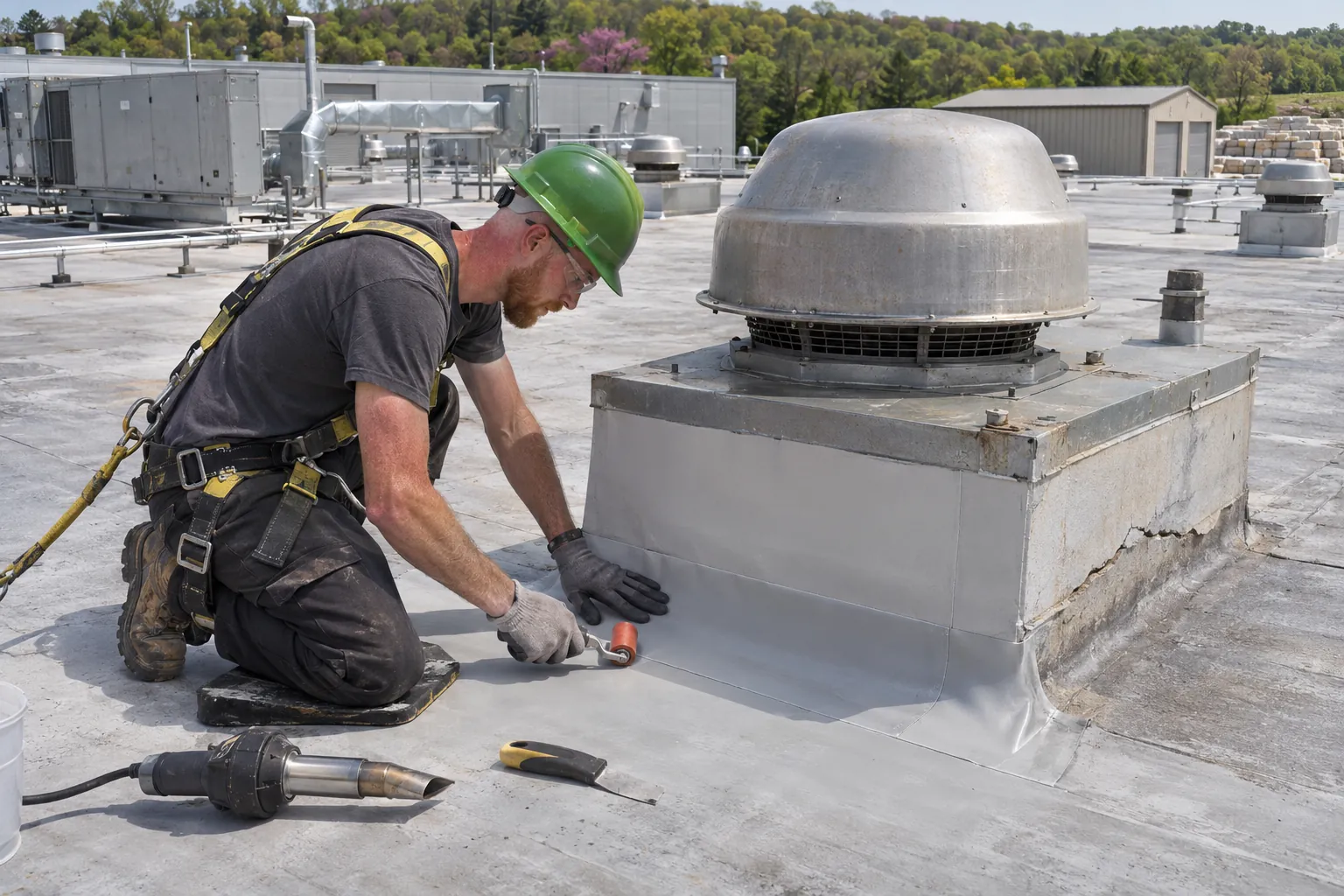
Curb flashing is stripped and rebuilt in the roof membrane or metal, cabinet seams get sealed, and condensate is piped to a drain.
Termination bars are reset and sealed, base flashing is replaced where it split, and open coping joints are closed.
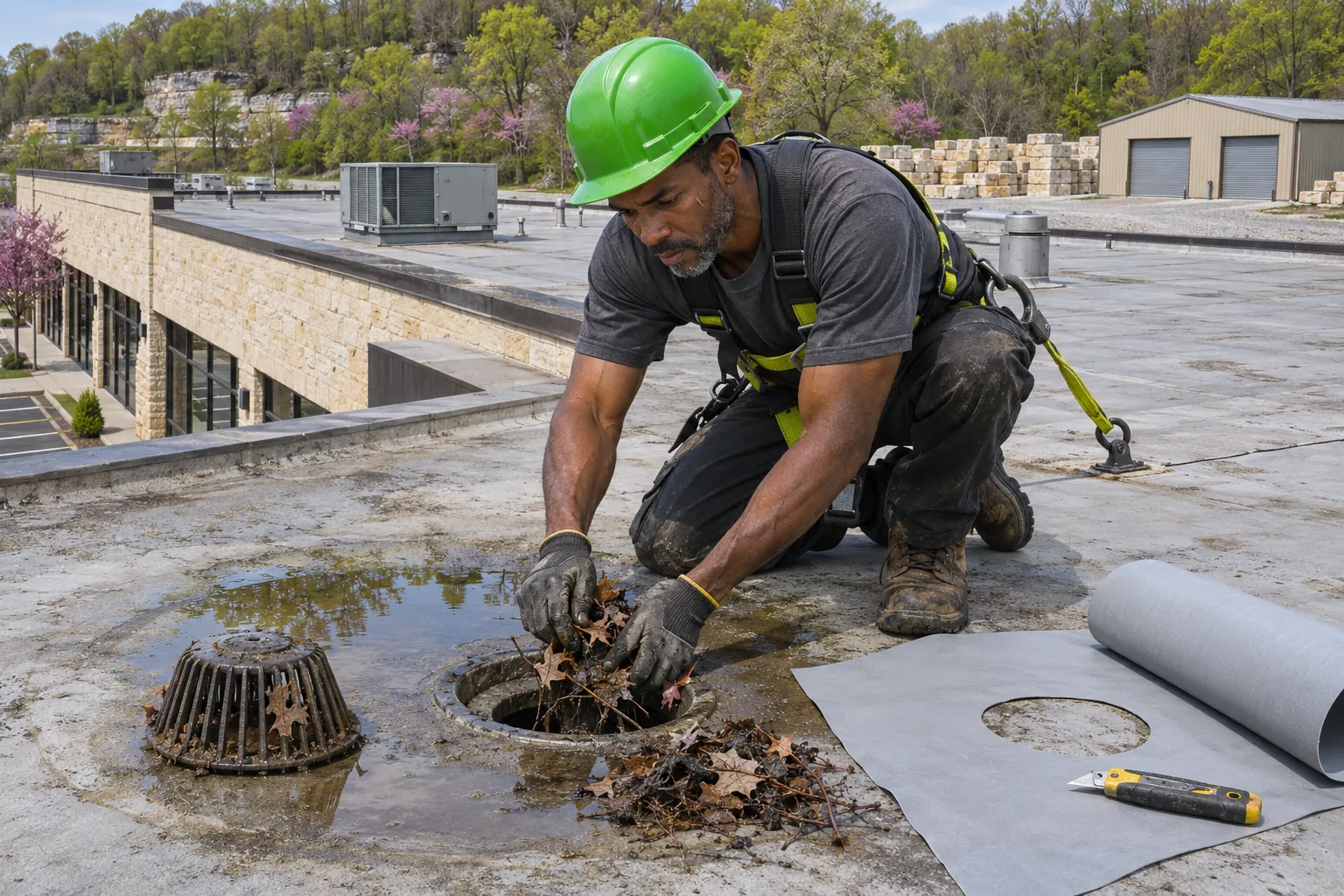
Strainers, clamping rings, and scupper liners are replaced, and the membrane around them is reflashed.
Wet insulation along the path the water traveled is cored, cut out, and replaced so the leak does not return as rot.
A leak repair is finished when both the opening and its water path are dealt with.
A growing stain means water is still getting in. Call and describe where it shows up, and we will set up a roof visit.
Leak tracing works from the inside out, then back down to confirm.
The stain, drip, or wet tile is measured from two walls so the same spot can be found on the roof above.
Curbs, seams, penetrations, and wall flashing are checked above the mark and upslope of it, since water travels.
The failed detail is repaired, and wet insulation along the water path is cut out and replaced.
You receive photos and a short note on where water entered, which helps if the lease splits roof costs.
Once a leak is traced, the fix often belongs to one of these repair types.

Seams, drains, and blisters on low-slope membrane roofs.

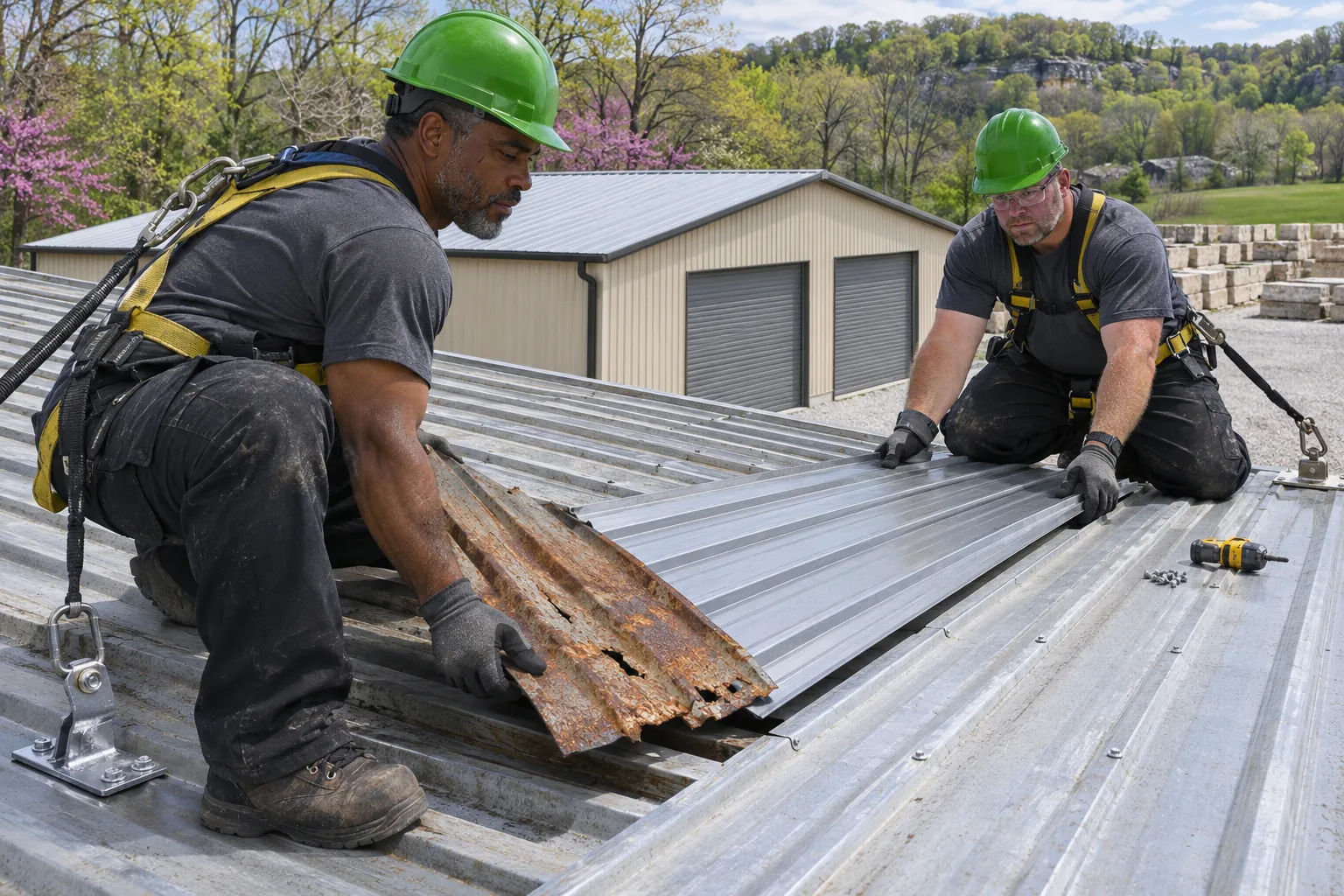
Rusted panels, open laps, and loose screws on steel roofs.

Plant roofs with fans, ducts, and busy floors below.
What owners and tenants ask once water starts coming through.
Failed curb flashing, open seams in the unit cabinet, loose access panels, and condensate lines draining onto the roof are the usual causes. Curbs set too low let water run over the flashing in heavy rain or snowmelt. The fix is reflashing the curb, sealing the cabinet, and piping condensate to a drain.
Cost follows how hard the leak is to trace, the roof system, how many entry points there are, how much wet insulation needs replacing, and access. Leaks at walls, curbs, and drains take more detail work than a puncture in the open field. A free on-site estimate checks the actual leak before pricing it.
Landlords handle roof leaks under many leases, but the lease decides, and net leases can shift that cost to tenants. Tenants should report a leak in writing right away to limit damage. Our photos and notes on where water entered and what was repaired help both sides settle it under the lease.
During a thaw, meltwater heads for drains and gutters still blocked by ice, backs up, and sits against seams, flashings, and fasteners. Openings that shed rain fine start leaking. Clearing drains, sealing seams, and raising low flashings before winter cuts down on these leaks.
Yes. When weather or parts hold up a permanent repair, a temporary seal over the opening can stop water for a short stretch. It is listed as temporary on your photos so the full repair gets scheduled.
Plastic sheeting, buckets, and drop cloths go under the work area inside, and any ceiling tile that soaked through is flagged so maintenance can swap it once the roof is closed.
Tell us where the water lands and when it shows up. We will trace it to the roof opening and price the repair.